LAB Pro
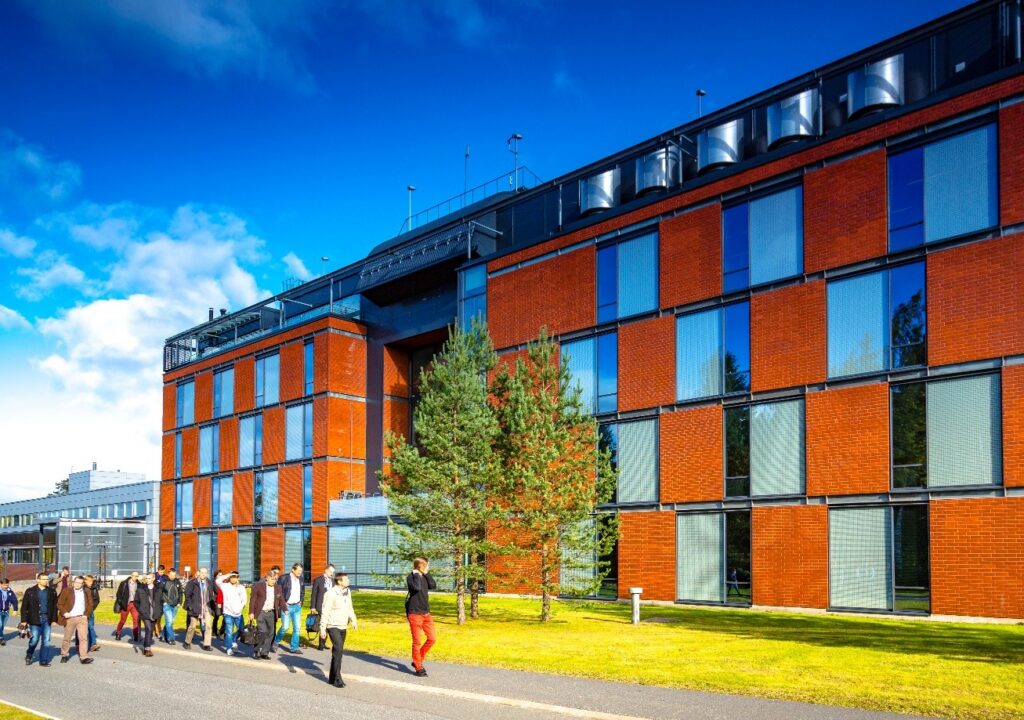
Regional development involves strengthening the economic, social, and environmental conditions that enable regions and their communities to thrive. It includes supporting employment, business competitiveness, and sustainable growth, while developing the capabilities needed to respond to changing economic and societal issues. Each region has its own challenges, knowledge assets, and development needs. Regional development therefore requires approaches that connect these with opportunities for development and growth. Knowledge transfer (KT) supports this process by linking regional knowledge assets with innovation and development activities.
Authors: Sofia Ramos & Paula Pusenius
Companies, higher education institutions (HEIs), public authorities, and other regional actors contribute to this process not only through their activities but also through their interactions. Companies generate employment and develop products and services, while education and research organizations provide expertise, skills, and research-based knowledge. Regional authorities help establish shared priorities and coordinate development efforts. The relationships between these actors influence how effectively regional resources can be translated into practical improvements and long-term value.
Knowledge flows as a foundation for regional innovation
Innovation supports regional development by enabling organizations to introduce new products, services and processes, improve productivity, and respond to emerging needs. Collaboration brings together important regional actors with different expertise to co-create and co-innovate. Regional innovation, however, extends beyond specific collaborative project outputs: knowledge is generated, distributed, and used by firms, HEIs, public authorities, intermediaries, and users (Miller et al. 2016).
Innovation, therefore, depends on how knowledge flows. In other words, the regional actors’ ability to access external knowledge, interpret it, combine it with existing capabilities, and apply it in new contexts (Audretsch & Belitski 2024). Having research-based knowledge or innovative companies within a region creates opportunities, but their contribution to regional development also depends on the connections that make knowledge accessible and useful.
Companies contribute practical knowledge about customers, markets, and operational challenges. For small and medium-sized enterprises (SMEs), collaboration can provide access to expertise, technologies, and development environments that would otherwise be difficult to access. Bringing different perspectives together can help regional actors identify development needs and create solutions with practical relevance. These interactions are central to KT, which views innovation as a process of creating, sharing, and applying knowledge.
Knowledge transfer strengthens regional innovation capabilities
KT literature views innovation as a process of continuous interaction through which knowledge, expertise, experiences, and networks move within and across organizations (Audretsch & Belitski 2024). From this view, KT extends beyond research commercialization to collaborative learning, co-creation, networking, and the development of innovation capabilities across regional actors (Miller et al. 2016).
This perspective is particularly relevant to HEIs. Universities can act simultaneously as knowledge producers, collaboration partners, and regional intermediaries. Within regional innovation systems, HEIs connect policy objectives, scientific knowledge, and practical implementation by facilitating partnerships, supporting KT, and strengthening the ecosystem rather than just generating research outputs (Hirschmann et al. 2025).
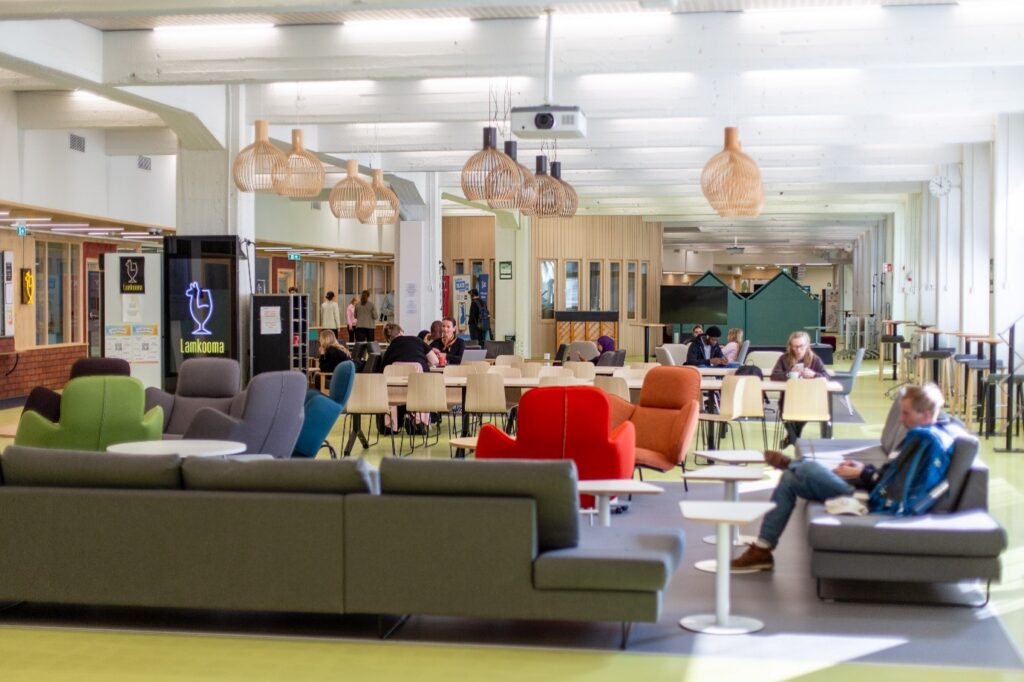
Image 1. HEIs are hubs for cooperation and innovation. (Image: © Teemu Leinonen)
Regional authorities also occupy an important complementary role. Through regional strategies, program implementation, funding, and network coordination, they shape which actors and development priorities are connected. KT is consequently not a one-directional movement from an HEI or regional authority to a recipient but a reciprocal process in which regional actors jointly create, interpret, and apply knowledge (Miller et al. 2016).
Smart specialization connects regional strengths with development priorities
Smart Specialization Strategies (S3) seek to translate regional strengths and knowledge assets into innovation-driven economic transformation. They provide a strategic direction for connecting research, business needs, and development resources around opportunities relevant to a region.
In Päijät-Häme, the S3 priorities for 2026–2029 are sports, food and beverage, and smart manufacturing, with sustainability as the main principle. The strategy emphasizes cooperation between regional actors and the application of RDI expertise to company growth and new business activities. (Päijät-Häme Regional Council 2026a)
From a KT perspective, smart specialization creates opportunities to strengthen knowledge flows between priority areas. Identifying these new connections requires continued interaction between companies, research organizations, and regional authorities. S3 also provides a basis for aligning individual development activities with broader regional objectives. Its practical value depends on whether organizations can turn shared priorities into collaboration, experimentation, and the application of new knowledge.
Funding instruments enable collaboration and experimentation
Regional development funding instruments play a central role in promoting innovation, competitiveness, and sustainable growth across European regions. They provide resources through which strategic priorities can be translated into development activities and enabling organizations to work together on challenges that may exceed their individual resources. For SMEs, limited time, expertise, and financial resources often restrict participation in RDI, and publicly funded projects can create opportunities to access specialist knowledge, test technologies, and explore new approaches with development partners.
From a KT perspective, the contribution of funding enhances the conditions that enable innovation. Funded collaboration can strengthen organizations’ ability to access, absorb, and apply knowledge while building relationships that support future innovation. These processes help explain how individual projects may contribute to longer-term regional development. Realizing this potential requires attention to how projects are designed and implemented, as well as planning how results and partnerships can be used after funding ends can help sustain their value.
ERDF and regional coordination support company development
The European Regional Development Fund (ERDF) is one instrument supporting this work. In Finland’s 2021–2027 programme, ERDF supports RDI capacities, digitalization, SME growth and competitiveness, and the transition towards a carbon-neutral economy. (Päijät-Häme Regional Council 2026b)
Päijät-Häme Regional Council connects ERDF funding with regional development objectives through project selection and decision preparation. Funded projects must align with the regional strategy and smart specialization priorities, guiding funding allocation (Ibid). Through this framework, company development can be supported by strengthening access to research expertise, collaboration, and opportunities to test and apply knowledge. HEIs and other development organizations can help companies translate these opportunities into practical activities.
From this perspective, a significant contribution of a funded project may be the strengthened capacity of organizations to absorb, apply, and generate knowledge for future innovation. When companies continue using what they have learned and partners maintain productive relationships, regional development funding can contribute to KT processes and capabilities that support renewal beyond the project period.
References
Audretsch, D. B. & Belitski, M. 2024. Knowledge collaboration, firm productivity and innovation: A critical assessment. Journal of Business Research, 172, 114412. Cited 1 Nov 2026. Available at https://doi.org/10.1016/j.jbusres.2023.114412
Hirschmann, D., Feser, D. & Winkler-Portmann, S. J. 2025. The course to sustainability: the role of university-related intermediaries in providing directionality to regional innovation initiatives. Review of Regional Research, 1–31. Cited 1 Nov 2026. Available at https://doi.org/10.1007/s10037-025-00223-5
Miller, K., McAdam, R., Moffett, S., Alexander, A. & Puthusserry, P. 2016. Knowledge transfer in university quadruple helix ecosystems: an absorptive capacity perspective. R&D Management, 46(2), 383–399. Cited 1 Nov 2026. Available at https://doi.org/10.1111/radm.12182
Päijät-Hämeen liitto. 2026a. Smart specialisation. Cited 1 Nov 2026. Available at https://paijat-hame.fi/en/alykas-erikoistuminen/
Päijät-Häme Regional Council. 2026b. ERDF 2021–2027. Cited 1 Nov 2026. Available at https://paijat-hame.fi/en/1rahoitus/eakr-2021-2027/
Authors
Sofia Ramos works as an RDI Specialist at LAB University of Applied Sciences, helping SMEs navigate innovation, commercialization, and growth. She focuses on building bridges between companies and the academic world. Sofia is interested about making research practical and useful for entrepreneurs.
Paula Pusenius is a Researcher and Project Manager of the KnowledgeAnalytics project at LAB University of Applied Sciences. She is also a doctoral researcher, focusing on knowledge management in public sector.
Illustration: Multi-organization collaboration strengthens regional innovation and growth. (Image: © Teemu Leinonen)
Reference to this article
Ramos, S. & Pusenius, P. 2026. Regional development through knowledge transfer. LAB Pro. Cited and the date of citation. Available at https://www.labopen.fi/lab-pro/regional-development-through-knowledge-transfer/