LAB Pro

Extended reality is moving beyond the confines of the screen. As cumbersome headsets are gradually replaced by lightweight AR glasses, the interface transitions from a rectangular format to a seamless integration with our surroundings, vying for our attention. In everyday scenarios, this shift raises considerations of comfort. However, in high-stakes situations such as driving or military operations, it becomes a matter of safety: critical information must be clearly prioritized, with essential data at the forefront and ambient details maintained in the periphery, especially as stress limits our capacity to process information. This article presents one way to design for it: the RBL Framework for spatial XR.
Authors: Harri Heikkilä & Sami Syrjä
Extended reality (XR) augments human capabilities, letting us interact with the world in ways that would otherwise be impossible. It brings digital content and the user’s real environment together into a single contextual experience.
Today, XR still lacks general acceptance for several reasons. As is typical of emerging technologies, XR applications often prioritise new technological possibilities over the user’s experience. Current headsets are expensive and cumbersome, with limited appeal for consumer use. However, there are already viable professional use cases, for example in training (Sag 2024) and medical fields (Chow 2024; Degeurin 2026).
Smaller, more powerful headsets and lightweight AI-powered AR glasses are being developed (Heaney 2025; Bell 2026). Other technologies are also emerging that don’t require a headset to view spatial XR UI, useful for example in automotive HUDs (Lawrence 2026).
Privacy concerns (Lepapa et al. 2026; Hays 2026) still need to be addressed before social acceptance can be expected. Even so, the new capabilities, combined with smaller and more comfortable form factors, are already driving renewed interest (Subin 2026). As XR becomes more commonplace, the need for XR-specific human-centred UX design grows.
The design problem we face
In XR, digital elements and the real world exist together, competing for attention. The UI needs to adapt to dynamic environments, contexts, and situations, as well as to the user’s mental state, task, and actions. As a result of this complexity, it can be hard to decide where, how, or when UI should appear to the user. A poorly designed XR user experience can be distracting, uncomfortable, or even dangerous.
The effect is pronounced in demanding and stressful situations. In vehicle HUDs or defence applications, for example, focus and situational awareness are critical and distractions must be minimised to ensure performance and safety.
Flat-screen conventions are not always sufficient or applicable in spatial UX design. However, there is a lack of human-centred design frameworks for spatial XR.
What is human-centred design in spatial XR UX?
The user’s attention and cognitive load are finite resources that the UX design must protect. The concept of Calm Technology (Weiser & Brown 1995) and the Calm Technology principles popularised by Case (2016) point the way to human-centred XR UX design.
The design uses both the centre and the periphery of the user’s attention to deliver information without overburdening them. UI is minimal and moves to the centre of attention only when necessary, allowing the user to better focus on their primary task as well as their environment. While primary attention is typically visual and direct, lower-priority information can rely more on ambient awareness, for example through audio or haptics. Clearing the visual space leaves the user’s real environment unobstructed, so the essential digital information can receive focused attention.
The RBL Framework developed as a response
A spatial XR user interface can consist of many separate UI elements such as tool controls, navigation guidance, information containers, labels, status indicators, notifications, and more. Without a structured approach, decisions about how these elements behave in 3D space often come down to designer intuition or are driven by aesthetic preference and technical constraints. The result can be inconsistent, and in demanding contexts, even unsafe.
The RBL Framework — named for its three aspects, role, behaviour, and lifecycle — is a structured reasoning tool for spatial XR UI design. It addresses information architecture, human factors, and spatial UX systematically, with human-centred outcomes as the goal rather than a byproduct.
At the heart of the framework is the concept of semantic role. Each UI element has a role that defines its meaning and purpose from the user’s perspective. The role is defined along two dimensions: the context the element belongs to (Shell, Task, or World), and its consequence level (how critical it is for the user to notice and respond to). Identifying the semantic role is the foundational step, because it determines everything that follows. (Syrjä 2026.)
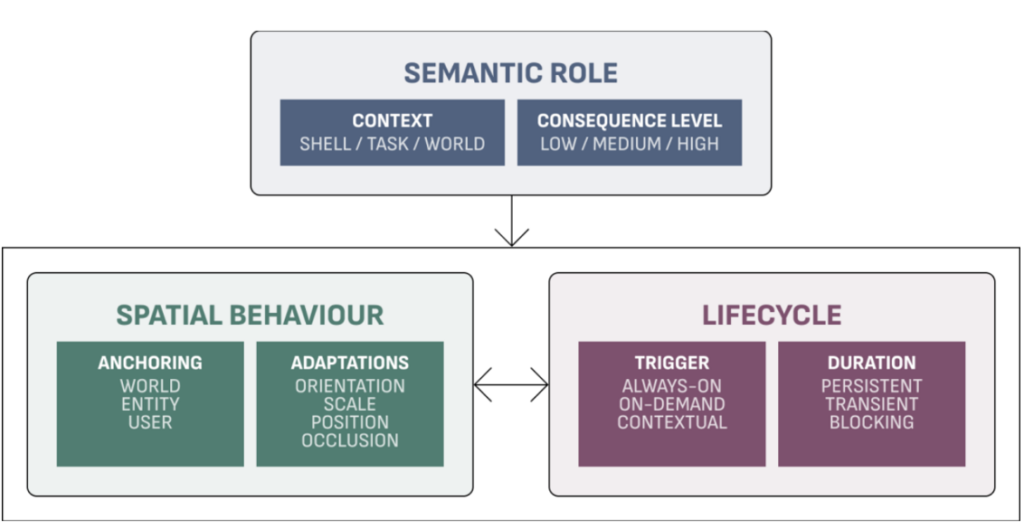
Image 1. The RBL Framework. (Syrjä 2026)
Let’s consider a contextual tool panel in a spatial design application. Its tools are application-specific, which places the panel in the Task context. It enables the user to work, but doesn’t require immediate attention, so its consequence level is Medium. From that role, spatial behaviour follows: the panel needs to be available wherever the user is, so it should be anchored to the user’s body or hand rather than being fixed in the environment. Its lifecycle follows from the same reasoning: it can be on-demand, appearing when the user needs it and remaining visible until dismissed. None of these decisions are arbitrary. Instead, they are grounded in what the element means and how critical it is to the user.
This logic is applied to all UI elements. Once every element has a defined role, they can be mapped into a Semantic Role Matrix. This 3×3 grid organises UI elements by their context and consequence level. The matrix makes the structure of the UI visible at a glance, reveals prioritisation conflicts, and supports design decisions about layout, depth, and interaction. It also serves as a practical artefact for documenting decisions and aligning teams and stakeholders.
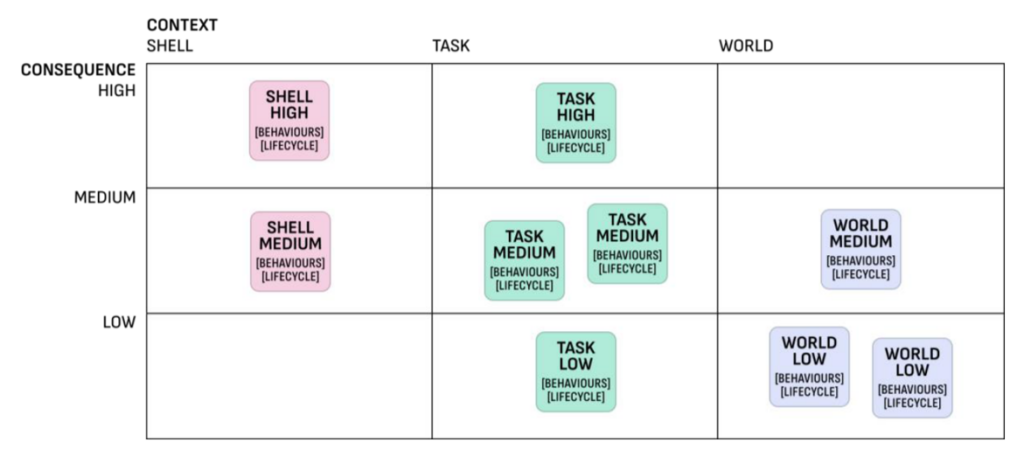
Image 2. The Semantic Role Matrix. (Syrjä 2026)
The framework does not offer exact solutions. It guides reasoning toward meaningful UI structures that align with mental models and Calm Technology principles. Human factors like cognitive load, comfort, and safety are at the centre of every decision.
An opportunity to get XR right
When spatial UI is designed with human factors at the centre, the result is a calmer experience. The interface stays out of the way of the real environment, allowing the user to focus on their task. Information appears only when needed, at an appropriate level of prominence. The user feels more present, with less friction and lower cognitive load.
XR is still early enough that the conventions we establish now can shape how it develops. For designers working in this space, there is a real opportunity, and a responsibility, to push spatial computing toward experiences that serve people rather than overwhelm them.
References
Bell, K. 2026. Xreal’s Project Aura smartglasses are a maximalist take on Android XR. Engadget. Cited 26 May 2026. Available at https://www.engadget.com/2177998/android-xr-xreal-project-aura-hands-on/
Case, A. 2016. Calm Technology: Principles and Patterns for Non-Intrusive Design. Sebastopol, CA: O’Reilly Media.
Chow, A. 2024. Why Surgeons Are Wearing The Apple Vision Pro In Operating Rooms. Time. Cited 24 May 2026. Available at https://time.com/7093536/surgeons-apple-vision-pro/
Degeurin, M. 2026. Surgeon wears Apple Vision Pro to fix cataract in medical first. Popular Science. Cited 24 May 2026. Available at https://www.popsci.com/technology/cataract-surgery-apple-vision-pro/
Hays, K. 2026. Smart glasses are ‘an invasion of privacy’ – Meta’s are selling better than ever. BBC. Cited 28 May 2026. Available at https://www.bbc.com/news/articles/cj37z8357e5o
Heaney, D. 2025. Meta Ray-Ban Display Review: First Generation Heads-Up Mobile Computing. UploadVR. Cited 26 May 2026. Available at https://www.uploadvr.com/meta-ray-ban-display-review/
Lawrence, C. 2026. How Distance Technologies is giving armoured vehicle crews x-ray-like vision. Tech.eu. Cited 26 May 2026. Available at https://tech.eu/2026/01/30/how-distance-technologies-is-building-x-ray-like-vision-for-tank-commanders/
Lepapa, N., Abdigadir, A. & Lindblom, J. 2026. She Came Out of the Bathroom Naked, Employee Says. Svenska Dagbladet. Cited 28 May 2026. Available at https://www.svd.se/a/K8nrV4/metas-ai-smart-glasses-and-data-privacy-concerns-workers-say-we-see-everything
Sag, A. 2024. Varjo’s XR Tech Advances Pilot Training In U.S. And Ukraine. Forbes. Cited 24 May 2026. Available at https://www.forbes.com/sites/moorinsights/2024/10/15/varjos-xr-tech-advances-pilot-training-in-us-and-ukraine/
Subin, S. 2026. Ray-Ban maker EssilorLuxottica says it more than tripled Meta AI glasses sales in 2025. CNBC. Cited 28 May 2026. Available at https://www.cnbc.com/2026/02/11/ray-ban-maker-essilorluxottica-triples-sales-of-meta-ai-glasses.html
Syrjä, S. 2026. Semantic roles in spatial XR design: Constructing the RBL Framework. Master’s thesis. LAB University of Applied Sciences. Lahti. Cited 25 May 2026. Available at https://urn.fi/URN:NBN:fi:amk-2026052918961
Weiser, M. & Brown, J. 1995. Designing Calm Technology. Cited 28 May 2026. Available at https://www.karlstechnology.com/blog/designing-calm-technology/
Authors
Harri Heikkilä is a Principal Lecturer in Visual Communication and UX at the LAB University of Applied Sciences Institute of Design. He serves as the coordinator and tutor of the Digital Solutions in Design and Media programme within the Master’s degree studies.
Sami Syrjä is a Master’s degree student at LAB University of Applied Sciences. He studies in the Digital Solutions in Design and Media programme and specialises in the development of customer experience and digital services.
Illustration: Image generated with Google Gemini, modified by Sami Syrjä.
Reference to this article
Heikkilä, H. & Syrjä, S. 2026. XR user interfaces for humans. LAB Pro. Cited and date of citation. Available at https://www.labopen.fi/lab-pro/xr-user-interfaces-for-humans/