LAB Pro

Digitalization has never been more widely accessible, yet for many SMEs, it has never been more confusing which tools to use and how to use them efficiently. New platforms, AI tools, and software solutions are constantly marketed as essential for competitiveness, promising efficiency, financial advantages, and growth. However, the unfortunate reality is that many SMEs invest in digital tools without ever achieving meaningful results. The issue is rarely the availability of technology. More often, it is the absence of a clear understanding of what problem should be solved in the first place and how digitalization contributes to solving that problem, and therefore, contribute actual business value for SMEs.
Author: Sofia Ramos
When digitalization becomes tool-driven
A common pattern among SMEs is reactive digitalization, e.g., adopting tools because competitors are using them, because they are trending, because they seem easy to implement, or simply because they are marketed as promising quick results. This often leads to fragmented systems, overlapping tools, underutilized resources, and increasing costs without clear returns.
Research shows that technology adoption is not purely just a technical decision but is shaped by organizational readiness, external pressures, and internal capabilities. The Technology–Organization–Environment (TOE) framework highlights how SMEs must align their technological choices with their own resources, internal processes, and strategic context (Awa et al. 2016). When this alignment is missing, even the most sophisticated software and well-designed tools are of little use to entrepreneurs. SMEs must first have a clear understanding of internal processes, customer needs, and data usage, in order for tools to deliver value.
Similarly, the OECD (2021) emphasizes that SMEs often face capability constraints rather than technological barriers. Limited managerial time, lack of digital skills, and uncertainty about returns make it difficult to translate digital investments into performance improvements. As a result, digitalization becomes a series of random initiatives instead of a coherent and smooth transformation.
The hidden barrier among SMEs
The core challenge in SME digitalization is not access to tools, but access to actionable knowledge. Digitalization requires informed decision-making: identifying priorities, evaluating alternatives, and integrating solutions into existing operations. These decisions are complex and often made under uncertainty. SMEs typically lack the time, resources, or internal expertise to systematically evaluate different options (Audretsch & Belitski 2021).
Studies on knowledge management in SMEs highlight that while firms may have access to data and information, they often lack the structures and processes needed to transform that knowledge into strategic action (Cerchione & Esposito 2017). This gap between information and application leads to inefficiencies and missed opportunities. Moreover, digital transformation is inherently uncertain. SMEs operate with limited resources and cannot afford repeated trial-and-error investments. Without a systematic approach to learning, digitalization efforts risk becoming costly experiments rather than value-generating initiatives.
From tools to capabilities
Digitalization should not be understood only as the adoption of new tools, but as the development of organizational capabilities. These capabilities include the ability to identify opportunities, integrate technologies into useful and efficient workflows, and having the ability to continuously adapt to changing conditions.
Digital transformation can be described as an ongoing process of building dynamic capabilities, where firms continuously renew their strategies and operations in response to technological change (Warner & Wäger 2019). For SMEs, this means shifting focus from “what tool to buy” to “how to build the ability to use digital technologies effectively within our internal daily operations.” A structured, research-based approach supports this shift. Instead of relying on trends and assumptions SMEs can build on validated frameworks, empirical evidence, and analytical methods to guide their decision-making. This reduces uncertainty and increases the likelihood that digital investments lead to measurable outcomes and not a waste of precious and limited resources.
HEI–SME collaboration as a digitalization catalyst
Higher education institutions (HEIs) play a critical role in bridging the knowledge gap faced by SMEs. Through applied research, collaborative projects, and student engagement, HEIs provide access to expertise that is often unavailable within small firms. Importantly, HEIs act as neutral partners. Unlike software providers, HEIs are not tied to specific solutions, allowing the focus to be on identifying the most appropriate approaches for a given context rather than selling a solution. This makes HEIs particularly valuable in early-stage digitalization, where problem definition and prioritization are crucial. Collaboration can take multiple forms, such as analyzing customer journeys, mapping internal processes, identifying inefficiencies, or testing digital tools in controlled environments. These activities enable SMEs to move from intuition-based decisions to evidence-based strategies.
In this sense, HEI–SME collaboration can be seen as a risk-reduction mechanism. By building understanding before making investments, SMEs can avoid costly mistakes and accelerate learning. For SMEs, the biggest risk is not falling behind technologically but rather investing in the wrong things. By leveraging research-based knowledge and engaging in structured learning processes, companies can shift from reactive adoption to informed digital transformation. Ultimately, digitalization should be seen as a process of capability building rather than technology acquisition. The goal is not to implement as many tools as possible, but to develop the ability to use digital solutions in a strategic and integrated way.
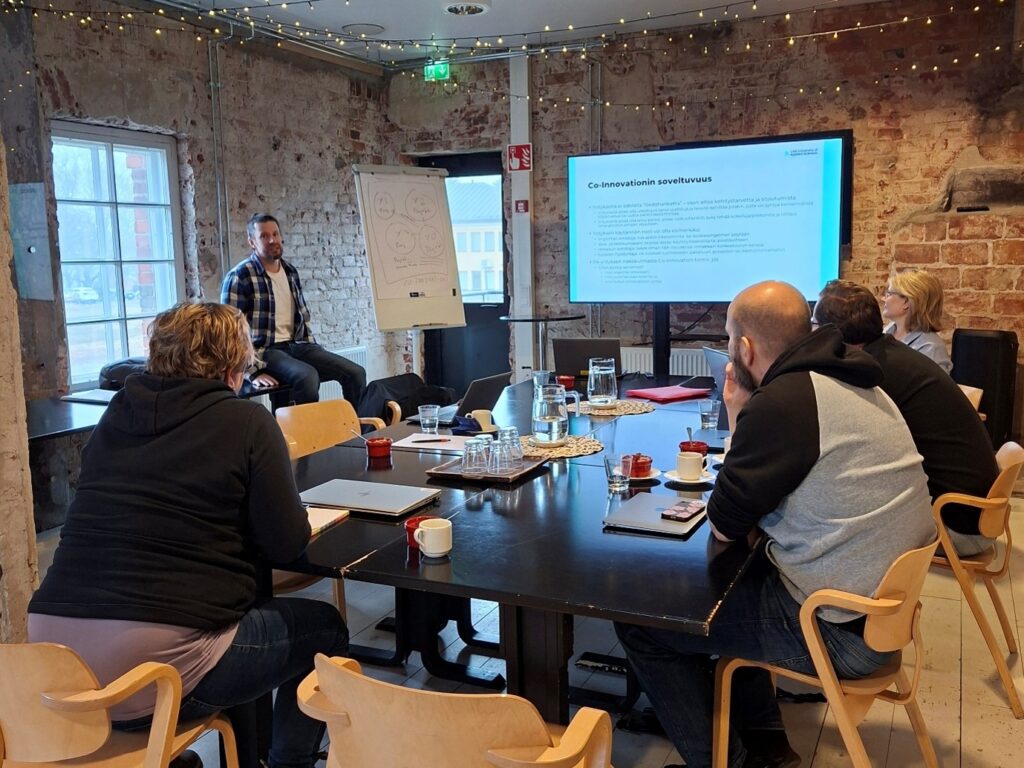
Image 1. NOKKA Workshop in Lappeenranta. (Image: Kati Korhola)
Projects such as NOKKA illustrate how this transition can be supported in practice. NOKKA facilitates access to research-based knowledge, practical tools, and collaborative learning environments (LAB 2026). The focus is not only on introducing digital solutions, but on helping companies understand how and why to use them.
This reflects the broader third mission of HEIs by translating research into societal and economic impact. In the context of SME digitalization, this means enabling firms to make better decisions, reduce uncertainty, and build the capabilities needed to compete in an increasingly digital economy.
References
Audretsch, D. B. & Belitski, M. 2021. Knowledge complexity and firm performance: evidence from the European SMEs. Journal of Knowledge Management. Vol. 25 (4), 693-713. Cited 21.9.2026. Available at https://doi.org/10.1108/JKM-03-2020-0178
Awa, H.O., Ukoha, O. & Emecheta, B.C. 2016. Using T-O-E theoretical framework to study the adoption of ERP solution. Cogent Business & Management. Vol. 3 (1), 1–23. Cited 21.9.2026. Available at https://doi.org/10.1080/23311975.2016.1196571
Cerchione, R. & Esposito, E. 2017. Using knowledge management systems: A taxonomy of SME strategies. Journal of Knowledge Management. Vol. 37 (1), 1551–1562. Cited 21.9.2026. Available at https://doi.org/10.1016/j.ijinfomgt.2016.10.007
Garzoni, A., De Turi, I., Secundo, G. & Del Vecchio, P. 2020. Fostering digital transformation of SMEs: a four levels approach. Management Decision. Vol. 58 (8), 1543–1562. Cited 21.9.2026. Available at https://doi.org/10.1108/MD-07-2019-0939
LAB. 2026. NOKKA – Rapid commercial development of companies’ innovation activities with the help of research results project. Cited 21.9.2026. Available at https://lab.fi/fi/projekti/NOKKA
OECD. 2021. The Digital Transformation of SMEs. Paris: OECD Publishing. OECD Studies on SMEs and Entrepreneurship. Cited 21.9.2026. Available at https://www.oecd.org/content/dam/oecd/en/publications/reports/2021/02/the-digital-transformation-of-smes_ec3163f5/bdb9256a-en.pdf
Warner, K.S.R. & Wäger, M. 2019. Building dynamic capabilities for digital transformation: An ongoing process of strategic renewal. Long Range Planning. Vol. 52 (3), 326–349. Cited 21.9.2026. Available at https://doi.org/10.1016/j.lrp.2018.12.001
Author
Sofia Ramos works as an RDI Specialist at LAB University of Applied Sciences, helping SMEs navigate innovation, commercialization, and growth. She focuses on building bridges between companies and the academic world. Sofia is interested about making research practical and useful for entrepreneurs.
Illustaration: Digital transformation is so much more than trying AI and new tools. (Image: Teemu Leinonen)
Reference to this article
Ramos, S. 2026. SME and digitalization from a research perspective. Cited and date of citation. Available at https://www.labopen.fi/lab-pro/sme-and-digitalization-from-a-research-perspective/