LAB RDI Journal

The use of artificial intelligence in healthcare is advancing at a rapid pace, yet educational curricula have not kept up. As part of the Erasmus+-funded DETECT 2.0 project, a survey was conducted across four European vocational education and training and higher education institutions to analyse the current state of artificial intelligence (AI), innovation, entrepreneurship, and sustainability competencies taught to healthcare and information and communication technology students. In line with the project’s objective to improve the quality of life of people with early-stage dementia through technology, the survey examined whether curricula included content on AI-based assistive technologies for dementia care. Over 82% of programmes lacked meaningful AI integration, 71% had no dementia-specific content, and 65% of educators expressed low confidence in their graduates’ preparedness to use AI-driven tools effectively and responsibly. These descriptive results underscore the urgent need for interdisciplinary curricula that bridge healthcare domain knowledge and technical AI competencies and provide the evidence base for DETECT 2.0’s training interventions.
Authors: Soile Komssi, Isabel Ferri-Mollá and Inga Pöntiö
Introduction
European healthcare is undergoing an accelerated digital transformation, with artificial intelligence (AI) offering significant potential to improve diagnostics, personalize care, and enhance system efficiency. Meaningful AI deployment requires healthcare professionals to have the skills to design, develop, evaluate, and deploy AI-based solutions, which in turn calls for innovation and entrepreneurial competencies to translate user needs into implementable technical solutions. However, evidence consistently shows that caregivers lack adequate training to effectively develop, adopt, and utilize AI technologies in practice (Sorrentino et al. 2024; Ruksakulpiwat et al. 2024; Dornan 2025). As a result, substantial gaps persist in workforce skills and in collaboration between healthcare professionals and technology developers (Hazan et al. 2024; Angus et al. 2025).
The Erasmus+-funded DETECT 2.0 project addresses this imbalance by strengthening AI-related and innovation competencies among healthcare professionals and students through experiential and multidisciplinary learning. It adopts an ecosystem-based approach that connects higher education institutions (HEI), vocational education and training institutions (VET), healthcare practice, and industry. By modernizing curricula, promoting student-centred and experiential pedagogies, and strengthening regional digital health innovation ecosystems, the project equips future healthcare and information and communication technology (ICT) professionals to co-develop ethical, patient-centred, and sustainable AI solutions. The specific healthcare challenge addressed is the growing incidence of dementia (World Health Organization 2021) and the lack of commercially available AI-based solutions that would enhance the quality of life of individuals with mild cognitive impairment (MCI) and early dementia (Dada et al. 2024).
The existing literature concerning AI in dementia care predominantly focuses on solutions for early detection and diagnosis and related clinical decision-making (Li et al. 2022; Mohamed et al. 2023; Veneziani et al. 2024). The target group of these solutions is care professionals. Furthermore, the bulk of research on AI-based solutions targeting people with dementia focuses on social robots, while other applications have remained marginal and have not reached commercial maturity or scale (Dada et al. 2024).
In the first phase of DETECT 2.0, our goal was to evaluate the current state of healthcare and ICT education in partner institutions, to generate evidence-based recommendations for curriculum development. In this article, we present the key findings of the curricular analysis.
Methods
The current state of healthcare and ICT education in four European VET and HEI institutions, with focus on innovation skills, entrepreneurial mindset, and AI competencies, was mapped using a semi-structured survey created with Microsoft Forms. In the survey, entrepreneurship skills were defined as the combination of an entrepreneurial mindset with initiative, responsibility, problem-solving, and collaboration skills, as well as basic financial literacy, adapting the competence areas of the EntreComp Framework (Bacigalupo et al. 2016) into practice-oriented items suitable for curriculum-level assessment across VET and HEI institutions. Innovation skills were defined as the ability to generate new ideas, solve problems, and develop activities together with others, in line with the “accelerating learning” and “working together” components of the Nesta Competency Framework for Experimental Problem Solving (Nesta 2019). Digital and AI readiness items were informed by DigComp and AI competence frameworks (Vuorikari et al. 2022; Miao & Cukurova 2024). The survey targeted volunteering educators of the partner institutions of the DETECT 2.0 project at Tampere Vocational College Tredu (Finland, VET), Curio (Netherlands, VET), LAB University of Applied Sciences (Finland, HEI), and Universitat Politècnica de València (Spain, HEI), recruited via email invitations. The survey consisted of twenty-eight closed and open-ended questions using Likert scales, multi-select options, and free-text fields, and was conducted during February–March 2026. A total of 34 responses were collected: 13 from Tredu, 10 from Curio, 7 from LAB, and 4 from UPV. Respondents were predominantly teachers or lecturers, complemented by four participants in research roles and two in educational development roles.
The curricular analysis first assessed the extent to which curricula covered the principles and applications of AI-based assistive technologies in the contexts of general healthcare and dementia care. Respondents were then asked to describe a learning task involving AI-based assistive technology and to indicate whether the emphasis was on tool use or critical evaluation of its output. Respondents also rated the emphasis placed on selected innovation competencies in their curricula. To examine how entrepreneurial mindset was fostered during studies, educators were asked whether curricula included health-tech entrepreneurship content and encouraged entrepreneurial thinking. The questionnaire further examined the integration of sustainability, digital competencies, and AI readiness within healthcare technology education. Respondents identified the foundational digital skills taught and assessed in their programmes and rated how well graduates were prepared to use AI-driven tools effectively and responsibly in their future professions. Finally, the respondents rated their confidence on graduates’ preparedness to effectively and responsibly use AI-driven tools in their future profession, and identified the main barriers to integrating AI, innovation, and sustainability into curricula and mapped the most significant gaps between current curricula and industry needs in AI-driven dementia care. Tables 1-2 provide the detailed content of the open-ended and closed questions of the survey, respectively.
| # | Question |
|---|---|
| 11 | Briefly describe a learning task in which students use AI‑based assistive technology (general or dementia‑related), and indicate whether the focus is on using the tool or critically evaluating its output. |
| 12 | How does your program foster innovation skills for developing new health technologies? |
| 17 | Please describe how students are encouraged to develop an entrepreneurial mindset. |
| 20 | Please provide examples of how the long-term societal, economic, or environmental impact of health technologies is discussed with students. |
| 23-26 | From your perspective, what are the most significant gaps between your current curriculum and the skills industry requires for AI-driven dementia care? Please specify for each area: 1) Gaps in Innovation Skills: (e.g., human-centric design, identifying unmet needs, prototyping) 2) Gaps in Entrepreneurial Mindset: (e.g., market validation, business case development, strategy) 3) Gaps in Sustainability & Ethics: (e.g., long-term viability, ethical impact, green AI) 4) Gaps in Digital Skills & AI Readiness: (e.g., data interpretation, technical usage, privacy/security) |
| 27 | What are the main challenges or barriers your institution faces in integrating advanced topics like AI, innovation, and sustainability into the curriculum (e.g., lack of faculty expertise, outdated resources, institutional constraints)? |
| 28 | If you could add three new topics or competencies to better prepare your students for the future of healthcare and ICT, what would they be? |
| 1-2 | Respondent's full name, professional role/title |
| 5 | Please provide the full name of the curriculum, program, or course being reported on. |
Table 1: Open-ended questions of the questionnaire mapping the current state and gaps of artificial intelligence, innovation, entrepreneurship, and sustainability competencies taught to healthcare and ICT students.
| # | Question | Response option | Response type | Rating scale | ||||
|---|---|---|---|---|---|---|---|---|
| 3 | Select your partner institution | LAB | Single choice | |||||
| UPV | ||||||||
| Tedu | ||||||||
| Avans | ||||||||
| Curio | ||||||||
| 4 | Type of institution | HEI | Single choice | |||||
| VET | ||||||||
| 6 | Select the primary field of the programme | Healthcare | Single choice | |||||
| ICT | ||||||||
| Other - please specify | ||||||||
| 7 | Relevant European Qualifications Framework (EQF) Level(s) covered by this program | Level 4 (Vocational competence) | Single choice | |||||
| Level 5 (Specialized vocational qualifications) | ||||||||
| Level 6 (University of Applied Sciences) | ||||||||
| Level 7 (Master´s Degrees) | ||||||||
| Other - please specify | ||||||||
| 8 | To what extent does your curriculum cover the principles and application of AI-based assistive technologies in general healthcare settings? | Not at all | Single choice | |||||
| Superficially | ||||||||
| Moderately | ||||||||
| In-Depth | ||||||||
| 9 | Does your curriculum specifically address the application of AI-based assistive technologies in dementia care? | No specific focus | Single choice | |||||
| Minor Case Studies | ||||||||
| Dedicated Modele/Topic | ||||||||
| 10 | Which of the following AI-based assistive technologies or applications are explicitly taught in your curriculum? | AI-based clinical decision support systems | Multiple choise | |||||
| AI-powered virtual assistants supporting | ||||||||
| Activities of Daily Living (ADL) and independent living | ||||||||
| AI-powered patient monitoring systems (e.g., fall detection, vitals) | ||||||||
| AI-enabled communication tools for patients/caregiver | ||||||||
| Ethical considerations of AI (privacy, autonomy, data security) | ||||||||
| AI for early detection of cognitive decline | ||||||||
| Cognitive training applications and tools | ||||||||
| 13 | Rate the emphasis placed on the following innovation competencies in your curriculum | Rate all | No emphasis | Minor Emphasis | Moderate Emphasis | Strong Emphasis | ||
| Human-centric design principles | ||||||||
| Identifying unmet clinical or patient needs | ||||||||
| Prototyping and iterative development | ||||||||
| Interdisciplinary collaboration (e.g., projects between healthcare and ICT students) | ||||||||
| 14 | Are the students required to work on projects that involve developing a novel solution to a real-world healthcare challenge? | Yes | Single choice | |||||
| No | ||||||||
| 15 | Does your curriculum include content related to entrepreneurship in the health-tech sector? | Yes | Single choice | |||||
| No | ||||||||
| 16 | Which of the following entrepreneurship topics are covered in your curriculum? | Developing a business case for a health-tech solution | Multiple choise | |||||
| Understanding market needs and validation | ||||||||
| Innovation management and strategy | ||||||||
| Funding and investment for startups | ||||||||
| None of the above | ||||||||
| 18 | On a scale of 1-5, how integrated are principles of sustainability into your curriculum's discussion of healthcare technology? | Rate all | 1 = Not at all integrated | 2 | 3 | 4 | 5 = Fully integrated | |
| Which of the following foundational digital skills are formally taught and assessed in your program | ||||||||
| Data identification and interpretation in a clinical context | ||||||||
| Navigating and using AI-driven software interfaces | ||||||||
| Understanding data privacy and security principles (e.g., GDPR in healthcare) | ||||||||
| Identifying bias in data or AI recommendations | ||||||||
| None of the above | ||||||||
| 19 | Does your curriculum address the environmental impact of digital technologies (e.g., e-waste, energy consumption of data centers/AI)? | Yes | Single choice | |||||
| No | ||||||||
| Partially | ||||||||
| 21 | Which of the following foundational digital skills are formally taught and assessed in your program? | Data identification and interpretation in a clinical context | Multiple choise | |||||
| Navigating and using AI-driven software interfaces | ||||||||
| Understanding data privacy and security principles (e.g., GDPR in healthcare) | ||||||||
| Identifying bias in data or AI recommendations | ||||||||
| None of the above | ||||||||
| 22 | How confident are you that graduates from your program are prepared to effectively and responsibly use AI-driven tools in their future profession? | Not confident | Single choice | |||||
| Slightly Confindent | ||||||||
| Moderately Confident | ||||||||
| Confident | ||||||||
| Very Confident | ||||||||
Table 2: Closed questions of the questionnaire, with response options and rating scales.
Quantitative analysis included frequency distributions and cross-tabulations by institution type (VET vs. HEI), field of education (Healthcare vs. ICT), partner institution, and a combined 4-way segmentation (Healthcare-VET, Healthcare-HEI, ICT-VET, ICT-HEI). This segmentation allowed the identification of specific gaps within and across institutional types and disciplinary domains. Qualitative inductive analysis involved translating all free-text responses from Finnish, Dutch, and Spanish into English, assigning meaningful text segments into codes, grouping them into broader categories, and finally deriving themes contextualizing the qualitative findings under the topics of innovation, entrepreneurship, and sustainability impacts. Code and theme derivation were conducted in two separate sets: Questions 12, 17, 20, 23-26, concerning the content and gaps of the present curricula, formed the first set and Questions 27 and 28, concerning the underlying institutional challenges and future education needs, formed the second set.
Due to the exploratory nature and sample size (N=34), results should be interpreted as indicative rather than statistically generalizable. Nevertheless, the diversity of the respondent pool, spanning two VET and two HEI institutions across three countries and two disciplinary fields, provides a meaningful cross-section of the European educational landscape in which DETECT 2.0 operates.
Results
AI-based assistive technologies covered in curricula
Of the 34 respondents, 12 (35%) reported no coverage of principles and application of AI-based assistive technologies in their curriculum, programme, or course, and a further 16 (47%) reported only superficial coverage. Only 6 respondents (18%) indicated moderate coverage; none reported extensive or comprehensive integration. This descriptive quantification indicates that over 82% of programmes lack meaningful AI-related content. The gap was particularly acute in ICT programmes: 9 of the 12 respondents reporting no coverage of principles and application of AI-based assistive technologies were from the ICT field ̶ a counterintuitive finding that reflects the absence of healthcare-contextualized AI content in technically oriented curricula.
Dementia-specific content was even more scarce: 24 respondents (71%) indicated no specific focus on dementia care, 8 (24%) reported minor case studies, and only 2 (6%) had a dedicated module or topic integrated in the curriculum, programme, or course. The most commonly covered AI-related topics were “AI-powered patient monitoring systems” such as fall detection and vitals tracking (11 respondents), “support for activities of daily and independent living” (10), and “ethical considerations of AI including privacy, autonomy, and data security” (10). Notably, 12 respondents selected “none of the above”, confirming that a substantial share of programmes has no exposure to these technologies at all.
Practical learning, innovation skills, and entrepreneurial mindset
Practical learning activities varied widely in sophistication. VET programmes focused on practical tool usage: testing digital clinic solutions from both caregiver and care receiver perspectives, experiencing dementia through virtual reality glasses (Into D’mentia programme at Curio), applying aids and assistive technologies to support care receivers’ functional capacity, and using simulation tools for scenario-based learning.
HEI programmes emphasized research-oriented innovation approach through development projects and internships with industry partners. In healthcare programmes, health technology was discussed but not developed, while ICT programs had the technical foundation but lacked domain-specific healthcare applications. A recurring theme in the free-text responses was the lack of direct development of new health technologies. As one Curio educator noted: “Our innovation skills programme is not focused on developing new health technologies. It focuses mainly on teaching skills and knowledge about working with technologies.” The emphasis placed on innovation-related competencies was limited across all institutions. Of the 34 respondents, 9 (27%) reported no emphasis on “human-centric design principles”, while 18 (53%) indicated minor or moderate emphasis, and 7 (21%) reported strong emphasis. For “identifying unmet clinical or patient needs”, 16 (47%) reported no emphasis, 16 (47%) minor or moderate, and only 2 (6%) strong emphasis. “Prototyping and iterative development” showed a similar pattern: 15 (44%) no emphasis, 17 (50%) minor or moderate, and 2 (6%) strong. “Interdisciplinary collaboration” was the weakest dimension, with 17 (50%) reporting no emphasis, 14 (41%) minor or moderate, and 3 (9%) strong. As expected, “identifying unmet patient needs” was largely absent from ICT curricula, while ICT educators more frequently reported coverage of “prototyping:” only 25% of ICT respondents reported no emphasis on this skill, compared with 55% among healthcare educators.
The integration of entrepreneurship was limited: 74% of respondents reported no entrepreneurship content in their curricula. Among those that did, the most frequently mentioned topics were “understanding market needs and validation” (18%), and “funding and investment for startups” (12%). Consistent with these findings, 82% indicated that students were not required to work on projects involving the development of novel solutions to real-world healthcare challenges. Where entrepreneurship education existed, it focused on general business skills and encouragement of entrepreneurial mindset rather than technology-specific or healthcare entrepreneurship. VET programmes rarely addressed entrepreneurship, while HEI programmes tended to include it in separate project courses. This pattern of poor integration was the dominant theme in responses to the Questions 17 and 24. Several respondents explicitly noted that entrepreneurship is not part of their institutional mandate, suggesting a cultural and structural barrier.
Sustainability, digital skills, and AI readiness
When respondents assessed how integrated the principles of sustainability were into their curriculums’ discussion of healthcare technology, the mean sustainability score was 2.2 out of 5. Healthcare programmes averaged 2.6/5, compared to 1.0/5 for ICT-VET and 1.3/5 for ICT-HEI, indicating that sustainability integration is almost entirely absent outside healthcare contexts. The environmental impact of digital technologies was addressed or partially addressed in 47% of programmes; 58% of VET educators reported no environmental impact coverage, versus 40% in HEI settings. Across responses describing how the long-term societal, economic, and environmental impacts of health technologies were addressed with students, the prevailing theme was the absence of systematic and explicit engagement with these dimensions.
Among foundational digital skills, “understanding data privacy and security principles” (e.g., GDPR in healthcare) was most frequently addressed (65% of respondents). This was followed by “navigating and using AI-driven software interfaces” (38%), “identifying bias in data or AI-generated recommendations” (35%), and “data identification and interpretation in a clinical context “(21%). Seven respondents (21%) indicated that none of these foundational digital skills were formally taught in their curriculum.
Educators’ confidence in their graduates’ preparedness to use AI-driven tools effectively and responsibly was strikingly low: 5 (15%) were not confident, 17 (50%) only slightly confident, 7 (21%) moderately confident, 4 (12%) confident, and just 1 (3%) very confident. The combined share of non-confident or slightly confident respondents reached 65% overall, rising to 79% among VET educators, while remaining at 30% among HEI educators. This VET–HEI confidence gap is one of the most actionable findings of the study.
Figure 1 presents the themes concerning the content and gaps of the present curricula, derived from responses to Questions 12, 17, 20, 23-26.
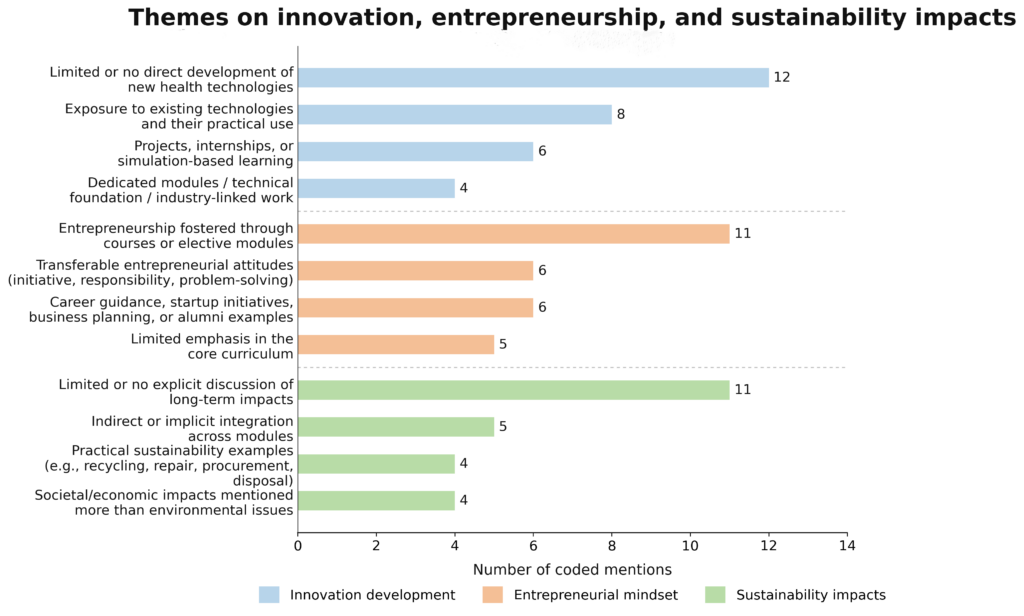 Figure 1: Themes concerning the content and gaps of the present curricula.
Institutional challenges and barriers
Thematic analysis of the translated free-text responses identified six challenge themes. Teacher expertise emerged as the dominant barrier: educators feel underprepared and lack the professional development needed to teach AI effectively. There is a lack of AI knowledge among healthcare teachers and healthcare knowledge within the technology departments. Funding and resource limitations and the rapid pace of technological change formed a secondary cluster of barriers. Respondents also noted curriculum structure limitations, insufficient teaching materials, and varying levels of institutional readiness. As one educator from Curio summarized: “Lack of demo/teaching material. Insufficiently trained teachers. Outdated resources and budget shortages.” Typically, partner institutions recognized that AI integration is needed but had no practical tools, time, and institutional support to implement it.
When asked about the most important new topics to integrate into curricula, the most frequently requested themes were AI and data skills and digital competence, closely mirrors the gaps identified in the quantitative analysis, reinforcing the alignment between educators’ perceived needs and the measurable curricular deficits.
Figure 2 presents the themes reflecting challenges of present education and educators’ wishes for future curricula, emerging from responses to Questions 27-28. Figure 3 synthesizes the key findings from the cross-field and cross-institutional comparisons, based on responses to Questions 8, 9, 14, 16, 19, and 22.
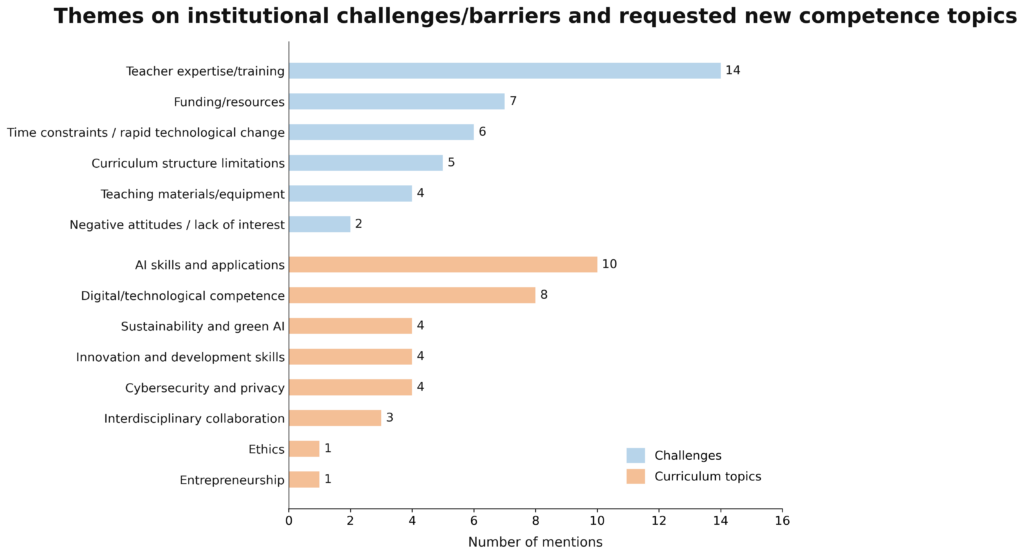 Figure 2: Themes reflecting challenges of present education and educators’ wishes for future curricula.
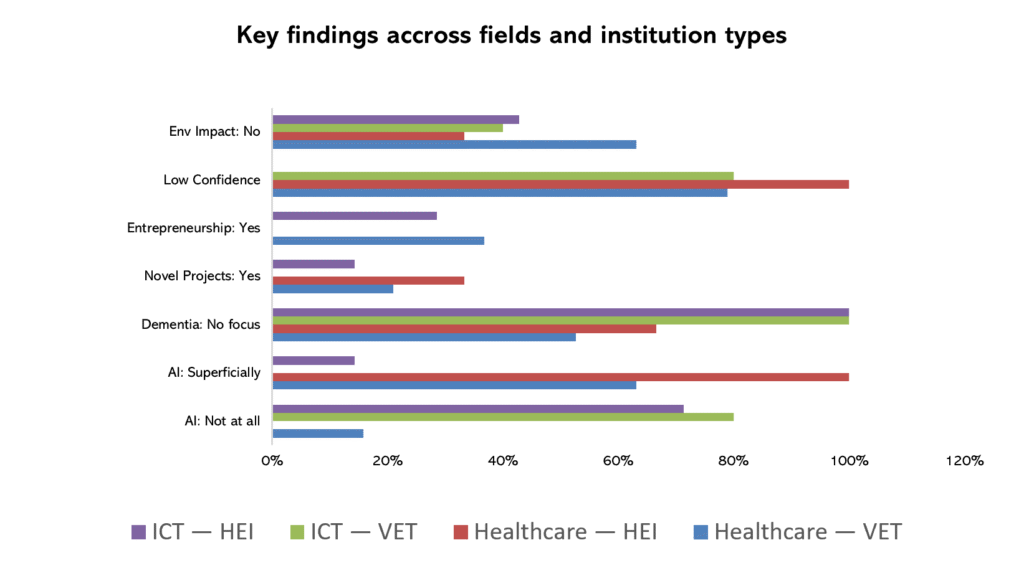 Figure 3: Key findings of between-group comparisons. ICT–HEI, ICT–VET, Healthcare–HEI, and Healthcare–VET denote respondents’ field and institution type.
Discussion
The survey of 34 VET and HEI educators in the fields of healthcare and ICT, across four institutions in three European countries, pointed to a significant gap between the growing importance of AI-based assistive technologies in healthcare and their integration into current curricula. Due to the small sample size, the results should be considered indicative rather than conclusive, setting a baseline for the further project work.
Based on the curricular analysis, AI technologies in general healthcare or dementia care domains are rarely covered, with VET programmes showing consistently lower AI integration and higher gaps across most analysed dimensions. ICT-VET is the most underserved segment (80% with no AI coverage, sustainability score of just 1.0/5), followed by ICT-HEI (71% with no AI coverage, sustainability score 1.3/5). This observation is consistent with previous findings that ICT students often lack exposure to real-world healthcare environments, limiting their ability to translate technical expertise into clinically meaningful AI solutions (van Haeften et al. 2024; Zahlan et al. 2023). HEI programmes benefit from more research-oriented frameworks and show relatively stronger foundations but still lack dementia-specific and sustainability content.
Innovation teaching varies dramatically across institutions. VET programmes focused on practical tool usage, while HEI programmes emphasized research-oriented innovation with development projects. Educators of healthcare programmes noted that health technology is discussed but not developed, while ICT programmes provide the technical foundation but lack domain-specific healthcare applications. Innovation-oriented activities were largely absent, with 82% of respondents indicating that students are not required to work on novel solution development projects.
Entrepreneurship education appeared nascent across most programmes. Where entrepreneurship education existed, it focused on general business skills rather than technology-specific or healthcare entrepreneurship and was typically taught on separate courses rather than integrated to the curricula. Courses mentioned by respondents included “Entrepreneurial Behaviour”, “Care Innovation” and “Technology, Quality Improvement”, and “Working Skills”. Several respondents explicitly noted that entrepreneurship was not part of their institutional mandate, suggesting a cultural and structural barrier. The opportunity for DETECT 2.0 lies in embedding entrepreneurial thinking within health technology innovation modules rather than creating standalone entrepreneurship courses.
Sustainability integration was superficial across most programmes, typically limited to general responsibility awareness rather than systematic integration of sustainability principles into ICT or healthcare curricula. The connection between AI ethics, sustainable healthcare, and technology development was rarely made explicit. Programmes that scored higher on sustainability tended to be in healthcare, where patient wellbeing frameworks naturally incorporate some sustainability elements.
Digital competence gaps appear to be most acute in healthcare-VET programmes, where educators reported basic digital literacy needs competing with clinical skill requirements. ICT programmes showed stronger digital foundations but lacked healthcare-specific application contexts. A critical insight is that the gap is not just about technical skills but about the ability to evaluate and ethically deploy AI in sensitive healthcare settings. In the free-text responses regarding institutional challenges and barriers to integrating AI, innovation, and sustainability into the curriculum, the lack of technical skills and development environments, as well as dependency on individual teachers’ interests, stood out. To better prepare graduates for future working life, respondents highlighted the need for hands-on learning and for knowledge of data interpretation and privacy/security topics. These digital competence gaps directly explain the low confidence levels: with 65% of educators expressing limited confidence in their graduates’ AI readiness, and reaching 79% among VET educators specifically, the need for targeted professional development is urgent.
Conclusions
Our findings suggest that healthcare education programmes include contextual understanding of patient needs but minimal technical content regarding the development, deployment, or evaluation of AI-based solutions, while ICT programmes teach the technical skills but lack healthcare domain knowledge. This divide, combined with the relatively low confidence of educators on the graduates’ AI readiness, represents the core challenge that DETECT 2.0 aims to address. However, further research with a sufficiently large sample is needed to enable robust statistical analysis and confirm these findings.
Based on these findings, we propose the following priorities for DETECT 2.0’s curricular interventions:
- Interdisciplinary learning environments with real-world assistive technology challenges to improve students’ exposure to domain-specific healthcare applications and for hands-on learning.
- Embedded entrepreneurial thinking and innovation methods within health technology modules, increasing entrepreneurship education in curricula and address the absence of novel solution projects.
- Interdisciplinary AI and dementia care modules combining AI literacy with dementia care and MCI applications, to enhance the coverage of AI-related education in healthcare and ICT curricula.
- Train-the-trainer programme to address educators’ low confidence in graduates’ AI-applied-to-care readiness.
The DETECT 2.0 project will enrich the findings of the curricular analysis with perspectives from the international dementia care ecosystem and will develop concrete proposals for renewing VET and HEI curricula across Europe. New digital training materials will be developed with a focus on AI-assisted dementia care, interdisciplinary innovation, and sustainable health technology. The team recommends the establishment of a shared competence framework across VET and HEI programmes for AI in healthcare, and the building of an inter-institutional platform for sharing best practices and innovation outputs.
References
Angus, D. C., Khera, R., Lieu, T., Liu, V., Ahmad, F. S., Anderson, B., Bhavani, SV., Bindman, A., Brennan, T., Celi, LA., Chen, F., Cohen, IG., Denniston, A., Desai, S., Embí, P., Faisal, A., Ferryman, K., Gerhart, J., Gross, M., Hernandez-Boussard, T., Howell, M., Johnson, K., Lee, K., Liu, X., Lomis, K., London, AJ., Longhurst, CA., Mandl, KD., McGlynn, E., Mello, MM., Munoz, F., Ohno-Machado, L., Ouyang, D., Perlis, R., Phillips, A., Rhew, D., Ross, JS., Saria, S., Schwamm, L., Seymour, CW., Shah, NH., Shah, R., Singh, K., Solomon, M., Spates, K., Spector-Bagdady, K., Wang, T., Gichoya, JW., Weinstein, J., Wiens, J. & Bibbins-Domingo, K. 2025. AI, health, and health care today and tomorrow: the JAMA summit report on artificial intelligence. JAMA. Vol.334(18), 1650–1664. Cited 11 Jun 2026. Available at https://doi.org/10.1001/jama.2025.18490
Bacigalupo, M., Kampylis, P., Punie, Y. & Van Den Brande, L. 2016. EntreComp: The Entrepreneurship Competence Framework. Luxembourg: Publications Office of the European Union. Cited 11 Jun 2026. Available at https://op.europa.eu/en/publication-detail/-/publication/5e633083-27c8-11e6-914b-01aa75ed71a1/language-en
Dada, S., Van der Walt, C., May, A. A. & Murray, J. 2024. Intelligent assistive technology devices for persons with dementia: a scoping review. Assistive Technology. Vol.36(5), 338–351. Cited 11 Jun 2026. Available at https://doi.org/10.1080/10400435.2021.1992540
Dornan, M. 2025. Every nurse an AI nurse: A framework for integrating artificial intelligence across nursing practice, education, research and policy. Digital Health. Vol.11, 20552076251377939. Cited 11 Jun 2026. Available at https://doi.org/10.1177/20552076251377939
Hazan, E., Madgavkar, A., Chui, M., Smit, S., Maor, D., Dandona, G.S. & Huyghues-Despointes, R. 2024. A new future of work: the race to deploy AI and raise skills in Europe and beyond. McKinsey Global Institute. Cited 11 Jun 2026. Available at https://www.mckinsey.com/mgi/our-research/a-new-future-of-work-the-race-to-deploy-ai-and-raise-skills-in-europe-and-beyond#/
Li, R., Wang, X., Lawler, K., Garg, S., Bai, Q. & Alty, J. 2022. Applications of artificial intelligence to aid early detection of dementia: a scoping review on current capabilities and future directions. Journal of Biomedical Informatics. Vol.127, 104030. Cited 11 Jun 2026. Available at https://doi.org/10.1016/j.jbi.2022.104030
Miao, F. & Cukurova, M. 2024. AI competency framework for teachers. Paris: UNESCO. Cited 11 Jun 2026. Available at https://doi.org/10.54675/ZJTE2084
Mohamed, A. A. & Marques, O. 2023. Diagnostic efficacy and clinical relevance of artificial intelligence in detecting cognitive decline. Cureus. Vol.15(10). Cited 11 Jun 2026. Available at https://doi.org/10.7759/cureus.47004
Nesta. 2019. Nesta’s Competency Framework for Experimenting and Public Problem Solving. Cited 11 Jun 2026. Available at https://media.nesta.org.uk/documents/Nesta_CompetencyFramework_Guide_July2019.pdf
Ruksakulpiwat, S., Thorngthip, S., Niyomyart, A., Benjasirisan, C., Phianhasin, L., Aldossary, H., Ahmed, B. H. & Samai, T. 2024. A systematic review of the application of artificial intelligence in nursing care: Where are we, and what’s next? Journal of Multidisciplinary Healthcare. Vol. 17, 1603–1616. Cited 11 Jun 2026. Available at https://doi.org/10.2147/JMDH.S459946
Sorrentino, M., Fiorilla, C., Mercogliano, M., Esposito, F., Stilo, I., Affinito, G., Moccia, M., Lavorgna, L., Salvatore, E., Maida, E., Barbi, E., Triassi, M. & Palladino, R. 2024. Technological interventions in European dementia care: a systematic review of acceptance and attitudes among people living with dementia, caregivers, and healthcare workers. Frontiers in Neurology. Vol. 15, 1474336. Cited 11 Jun 2026. Available at https://doi.org/10.3389/fneur.2024.1474336
van Haeften, W., Zhang, R., Boesen-Mariani, S., Lub, X., Ravesteijn, P. & Aertsen, P. 2024. Bridging the AI skills gap in Europe: A detailed analysis of AI skills and roles. In Andreja Pucihar , A. P., Kljajić Borštnar, M., Blatnik, S., Bons, R. W. H., Smit, K., & Heikkilä, M. (Eds.). 37th Bled eConference – Resilience Through Digital Innovation: Enabling the Twin Transition. Conference Proceedings. Bled, Slovenia. June 9 – 12, 2024. Maribor: Maribor University Press. 385-402. Cited 11 Jun 2026. Available at https://doi.org/10.18690/um.fov.4.2024.22
Veneziani, I., Marra, A., Formica, C., Grimaldi, A., Marino, S., Quartarone, A. & Maresca, G. 2024. Applications of artificial intelligence in the neuropsychological assessment of dementia: A systematic review. Journal of Personalized Medicine. Vol. 14(1), 113. Cited 11 Jun 2026. Available at https://doi.org/10.3390/jpm14010113
Vuorikari, R., Kluzer, S. & Punie, Y. 2022. DigComp 2.2, The Digital Competence Framework for Citizens – With new examples of knowledge, skills and attitudes. Luxemburg: Publications Office of the European Union. Cited 11 Jun 2026. Available at https://op.europa.eu/en/publication-detail/-/publication/50c53c01-abeb-11ec-83e1-01aa75ed71a1/language-en
World Health Organization. 2021. Global status report on the public health response to dementia. Cited 11 Jun 2026. Available at https://iris.who.int/server/api/core/bitstreams/9e8aab50-ca34-45e0-9fb0-26e675746f65/content
Zahlan, A., Ranjan, R. P. & Hayes, D. 2023. Artificial intelligence innovation in healthcare: Literature review, exploratory analysis, and future research. Technology in Society. Vol. 74, 102321. Cited 11 Jun 2026. Available at https://doi.org/10.1016/j.techsoc.2023.102321
Authors
Soile Komssi holds a doctoral degree in applied physics from the University of Helsinki. She works as a Chief Specialist at the Faculty of Health Care and Social Services at LAB University of Applied Sciences.
Inga Pöntiö holds a Master’s degree in Health Sciences and works as a Senior Lecturer in Nursing at Tampere Vocational College Tredu, where she is also involved in the development of digital learning environments.
Isabel Ferri-Mollá is an Associate Professor at the Department of Computer Systems and Computation (DSIC) at UPV, where he specializes in artificial intelligence, machine learning, and their applications in healthcare and education.
Illustration: https://pxhere.com/fi/photo/1446749 (CC0)
Reference to this article
Komssi, S., Pöntiö, I. & Ferri-Mollá, I. 2026. Bridging the AI Skills Gap in Healthcare and ICT Education: A Curricular Gap Analysis Across European VET and HEI Institutions. LAB RDI Journal. Cited and date of citation. Available at https://www.labopen.fi/en/lab-rdi-journal/bridging-the-ai-skills-gap-in-healthcare-and-ict-education-a-curricular-gap-analysis-across-european-vet-and-hei-institutions/