LAB Pro
Supply chain disruptions have become a defining challenge for logistics companies across Europe, and Finnish small and medium-sized enterprises are feeling the pressure. Fin-land’s geographic position creates a particular kind of vulnerability, as the country depends heavily on international sea freight and long overland corridors. This article looks at the main disruptions affecting Finnish logistics SMEs, why smaller firms can be particularly vulnerable, and what they can do to strengthen their resilience.
Authors: Godofredo Quinonez & Dr. Jukka Sirkiä
What Disruptions Look Like on the Ground
The most common disruption reported was delays in transportation, reported by 42 percent of respondents. Next were labor shortages at 35 percent, while fluctuations in fuel prices affected nearly 27 percent. These disruptions are not isolated events but recurring operational challenges for Finnish logistics SMEs (Quinonez 2026). Interviews also revealed how transportation issues can have a domino effect, with a missed vessel departure leading to problems with warehouse scheduling, delivery failure and pressure on staff already under stress.
What makes it even more troubling is the severity gap. While most firms reported disruptions at low to moderate frequencies, 75 percent of respondents described the operational impact as moderate to high when disruptions did occur. This suggests that organizations face significant consequences precisely because they lack the buffers needed to soften the impact. Wieland & Durach (2021) argue that firms without adaptive capacity tend to absorb the effects of disruption rather than deflect them, and the Finnish data reflects this dynamic.
Why Smaller Logistics Firms Are Hit Harder Than Large Ones
Resource constraints can make resilience particularly challenging for Finnish logistics SMEs. Bhamra et al. (2011) note that SMEs often have limited financial resources, organizational redundancy, and specialized personnel, which can increase their vulnerability when disruptions occur. Tight operating margins leave little room for contingency planning, alternative supplier development, or technology investment, and the study confirmed that this continues to characterize many smaller operators in Finland.
This pattern appears clearly in the Finnish data. Medium‑sized enterprises scored noticeably higher on resilience capability than small enterprises, and firms with more than 20 years of experience outperformed newer entrants by a meaningful margin (Quinonez 2026). Experience accumulates into institutional knowledge, which becomes an important resource for managing disruptions. Newer firms may have more flexibility and more recently adopted digital tools, but they have not had time to build the supplier networks and tested response routines that can make a real difference when things go wrong.
There is also a workforce dimension that sometimes gets overlooked. Labor shortages in Finnish logistics reduce operational capacity, but they also reduce the organizational bandwidth available for planning. A firm that is already stretched thin on staff simply cannot dedicate people to contingency development, supplier assessment, or training. This creates a kind of compounding disadvantage that goes beyond what shows up on a balance sheet.
What the Research Found
Quinonez (2026) identified four main resilience strategies used by Finnish logistics SMEs: proactive planning, risk monitoring, collaborative partner networks and the adoption of digital instruments. The overall resilience capability was moderate with a grand mean of 3.83 on a five-point scale. Managers also tended to see their organizations as moderately resilient, which is broadly consistent with the quantitative results. Traditionally, leaders saw resilience through the lens of recovery – restoring service following a disruption, rather than anticipatory or pre-emptive investment. This distinction is important. Hilmola & Lähdeaho (2021) demonstrated the effect of the COVID-19 pandemic on Finnish logistics companies, especially the smaller ones, with a clear differentiation between companies that had prepared in advance and those that had not. Organizations that had invested in resilience before the crisis managed considerably better. The reactive approach used by many SMEs works to a degree, but it leaves companies exposed when a significant disruption arrives without warning.
Experience also appears to be an important resource for building resilience. The Finnish findings revealed that the more years of operation, the more resilience capability, indicating that repeated exposure to disruptions can help firms develop practical knowledge and response routines over time (Quinonez 2026). And although it takes time to build, experience itself can thus become a valuable organizational resource.
What Finnish Logistics SMEs Can Do Differently
The practical implications from the research are clear. First, even modest contingency planning makes a difference. Documenting response protocols for the most frequently encountered disruption types, such as transportation delays, labor shortages, and supplier failures, can reduce recovery time and prevent institutional knowledge from walking out the door when experienced people leave.
Second, supplier and partner diversification is worth the effort. Maintaining at least one alternative for each critical logistics dependency reduces single-source exposure. The cost of maintaining alternative relationships is real, but so is the cost of having no options when a primary supplier or route fails.
Third, digital tools should be treated as a resilience investment. Harju et al. (2023) found that procurement digitalization can strengthen supply chain resilience by improving information processing and reducing uncertainty. However, the benefits of digitalization also depend on effective information sharing and cooperation among supply chain partners. Technology alone does not create resilience; it needs to be supported by effective relationships and collaboration.
Fourth, cross-training staff, even at a limited scale, reduces the operational impact of labor shortages and strengthens response capacity when other disruptions arrive simultaneously.
The Bigger Picture
Supply chain resilience is particularly important for SMEs operating in environments like Finland, where geography, seasonality, and port dependence amplify baseline vulnerability. The research shows that Finnish logistics SMEs are managing, but at a moderate level while facing conditions that occasionally demand much more. The firms that have built stronger resilience over time have done so largely through accumulated experience, deliberate partner networks, and investment in digital visibility, not through any single intervention. Resilience does not mean disruptions can always be prevented. It means being prepared to manage their impact, adapt, and recover without lasting damage to customers or operations. For most Finnish logistics SMEs, the path toward that kind of resilience runs through small, consistent investments in planning, relationships, and digital capability, rather than waiting for the next disruption to force a response.
References
Bhamra R., Dani, S. & Burnard, K. 2011. Resilience: The concept, a literature review and future directions. International Journal of Production Research. 49 (18), 5375-5393. Cited 27 Aug 2026. Available at https://doi.org/10.1080/00207543.2011.563826
Harju, A., Hallikas, J., Immonen, M. & Lintukangas, K. 2023. The impact of procurement digitalization on supply chain resilience: empirical evidence from Finland. Supply Chain Management: An International Journal. 28 (7), 62–76. Cited 27 Aug 2026. Available at https://doi.org/10.1108/SCM-08-2022-0312
Hilmola, O.-P. & Lähdeaho, O. 2021. Covid-19 pandemic: Small actor point of view on manufacturing and logistics. World Review of Intermodal Transportation Research 1(2), 87-105. Cited 27 Aug 2026. Available at https://doi.org/10.1504/WRITR.2021.115411
Wieland, A. & Durach, C. F. 2021. Two perspectives on supply chain resilience. Journal of Business Logistics. 42 (3), 315-322. Cited 27 Aug 2026. https://doi.org/10.1111/jbl.12271
Quinonez, G. 2026. Supply Chain Resilience and Disruption Management Among Small and Medium-Sized Logistics Enterprises in Finland. Master’s thesis. LAB University of Applied Sciences. Cited 9 Sep 2026. Available at https://urn.fi/URN:NBN:fi-fe20260908123800
Authors
Godofredo Quinonez is a student at the LAB University of Applied Sciences in the Master of Business Administration program. With a professional background spanning retail, manufacturing, banking, insurance, finance, and logistics, he has extensive experience in business and logistics operations. His professional background and experience in the logistics industry have contributed to his interest in supply chain resilience and disruption management among small and medium-sized logistics enterprises in Finland.
Dr. Jukka Sirkiä is a Senior Lecturer at LAB University of Applied Sciences. He has solid experience in customer-oriented business management of IT service companies and, in addition to his Senior Lecturer duties, works as a project expert in the business unit of LAB University of Applied Sciences.
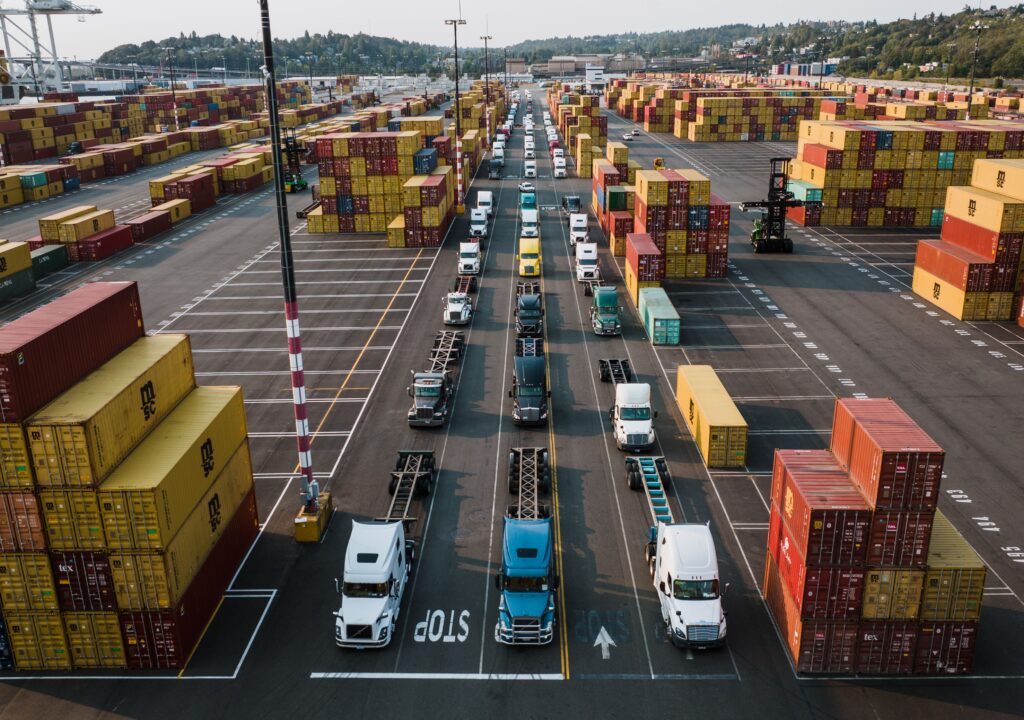
Illustration: https://www.pexels.com/photo/parked-trucks-and-cargo-containers-on-port-13766346/(Pexels Licence)
Reference to this article
Quinonez, G. & Sirkiä, J. 2026. When the Chain Breaks – Lessons from Finnish Logistics SMEs on Real Supply Chain Resilience. LAB Pro. Cited and date of citation. Available at https://www.labopen.fi/lab-pro/when-the-chain-breaks-lessons-from-finnish-logistics-smes-on-real-supply-chain-resilience/