LAB Pro
Design is about more than how things look or work: it shapes the meanings and experiences we bring into our lives. From everyday objects to AI, the challenge is not to add more features, but to create content that matters—and is worth keeping.
Author: Markus Ahola
My October started with a great moment with design students in the early stages of their studies. I don’t teach much, and when I have a chance, it’s special for me to meet new people and hear their reflections on the experiences I share with them. Among 60 students, we talked about form giving, what it means in terms of communication, and designing meaningful content for people. Shame that the lecture was online, and despite the lack of gesture nuances and feelings, we still managed to have decent discussions. At the end of the lecture, I expressed my hope that they would ensure that whatever they design, the result would be beautiful as well. One student asked: “Are you kidding me? We have understood that we are not allowed to refer to beauty or aim for it?” I replied, ” Who does it if not designers? Why shouldn’t we aim for designing content that is also pleasant to watch?” Beauty, alongside usability, accessibility, and provocation, is among the many designable characteristics that make the things we are surrounded by meaningful.
What all are we designing?
Design is not about making something function, serving people, or scaling processes; it can help with those, too. Design affects the most concrete and closest surface, illustration, or interface that people come into contact with when engaging with organizations, services, and products.
To highlight how many designed encounters we have in our lives, I use stories as an example that people love to consume. The story itself, and how it’s told, is an exciting form of art, and the process of consumption is full of unavoidable design-mediated interactions. Stories are typically distributed through physical bookshops with designed interiors and bookshelves, or through digital marketplaces with designed user experiences. With books, there’s a book cover and typeface design. On top of that, with audiobooks, you usually operate the cellphone and headphone user interfaces (UIs) while operating the devices. You even wear headphones; the design should be comfortable and suit your style. When streaming stories from the TV, the interaction becomes design-heavy: first feeling the remote-control materials, then navigating within three UIs simultaneously (remote control, TV, and application). While the TV apparatus itself occupies significant space in your living room, it would be nice if the design made it blend with your home’s style.
While these examples are individual design-mediated interactions, a similar process yielding meaningful design repeats everywhere. The process is only a surface; design is more than that. Its communication, meanings, and experiences.
Meadows & Randers (2012) illustrate the design-mediated interaction: “People don’t need enormous cars; they need admiration and respect. They don’t need a constant stream of new clothes; they need to feel attractive, and they need excitement, variety, and beauty. People don’t need electronic entertainment; they need something interesting to occupy their minds and emotions.” (261–262). Who considers these emotions if not the designer?
Guess what, my washing machine has an AI!
A washing machine is one of those things that silently provides unquestionable value for our lives, designed to require as little attention as possible. Until it breaks down. I needed to replace mine and wanted a nice-looking (it’s a huge object in my laundry room), usable, reliable one that takes good care of my favorite clothes, which I don’t ever want to replace (because they fit well and make me feel good). I was advised to buy one with AI because its smart features automatically adjust washing programs, offer voice control, and let me follow the washing progress in the app. I concluded that some content we need in our lives, and some features need to earn a place in our lives to provide valuable content. I bought one without the so-called AI features. Don’t get me wrong, AI is great for many purposes, but we should be critical of what content to bring into our everyday lives. When was the last time you wished a washing machine had AI integrated?
Recently, I traveled to a conference on human-computer interaction that had an AI-heavy agenda. The community is a good place for design researchers to learn about the interaction between people and things we produce: what is meaningful? How to find it out? How to design meaningful interaction? Luckily, the conference discussion touched on my worry about integrating AI without distraction: How can we design AI to be more people-centric? How do we design metaphors to better understand complicated AI? How do we make AI understandable and meaningful to us? (Nordichi 2026) As Meadows & Randers (2012) noted, people consume meanings mediated by products and systems, and many of those meanings we can amplify through design. I’m just guessing that AI development hasn’t been user- or design-driven but has focused on testing what the technology can do. Where would we be with AI already if it had been developed as a valuable, context-specific content creator before being integrated everywhere?
I’ll end this content praising and AI criticism with another takeaway from the 7 Experiences Summit 2026 I just attended. One interesting idea of human productivity in the AI era could be: “Produce less, but better” Mitas (2026). This means that AI should help us refine our work, not produce more, as it often does. We, designers, should highlight our role in providing valuable content for people’s lives, with or without AI, so meaningful that they want to sustain it forever.
References
Meadows, D., & Randers, J. 2012. The limits to growth: The 30-year update. Routledge.
Mitas, O. 2026. You’re Still Here? The Point of Being an Experience Researcher in the Age of AI. Keynote at the 7 Experiences Summit. Utah, 29 October 2026.
NordiCHI. 2026. NordiCHI 26 main conference program. Cited 2 Nov 2026. Available at https://sites.uwasa.fi/nordichi2026/wp-content/blogs.dir/4/files/sites/222/2026/10/NordiCHI_2026_Main-conference.pdf
Author
Markus Ahola (Ph.D. Design) is an experience design researcher and chief specialist in the LAB Design for Futures research group. His research focuses on understanding how human experiences can be traced and translated into design drivers for the development of systems, services, environments, and products.
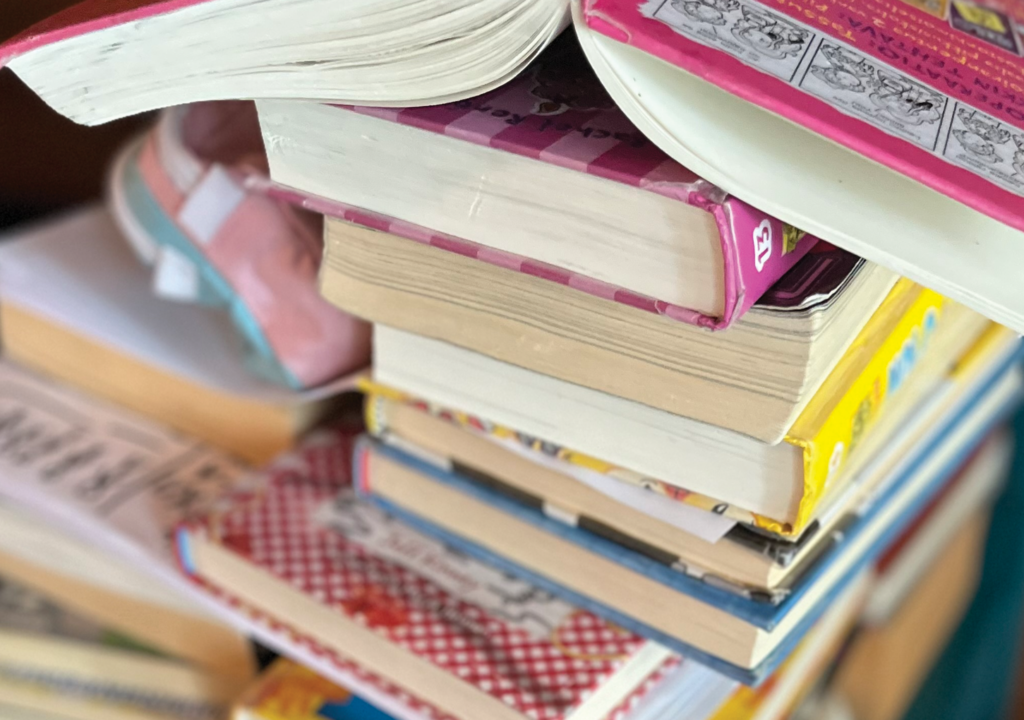
Illustration: Pile of books that my kids were reading last summer: selected from the library (one of the greatest service designs) by the appealing cover design, drafted stories interpreted (not swiped) with excitement, resulting in meaningful experiences through imagination. Stack was designed by kids, and I took the photograph to capture a meaningful moment to remember it. (Photo: Markus Ahola)
Reference to this publication
Ahola, M. 2026. Design is about Content. LAB Pro. Cited and date of citation. Available at https://www.labopen.fi/en/lab-pro/design-is-about-content/