LAB Pro

Digital transformation is often approached as a technology project: an organization selects a new system, introduces it to users and expects improved efficiency, transparency and ways of working to follow. In practice, however, technology alone rarely determines whether the change succeeds. The greater challenge is organizational: people need to understand why the change is necessary, accept new working practices and receive sufficient managerial support for the new way of working to become permanent.
Authors: Joonas Ekman & Sajal Kabiraj
Digitalization and organizational change
Introducing a new digital system can be relatively straightforward from a technical perspective. The more difficult task is changing how people work around it. Verhoef et al. (2021) distinguish between digitization, digitalization and digital transformation, with digital transformation involving broader changes in organizational structures, processes and ways of working.
This distinction is important because adopting digital technology does not automatically change an organization. Paper forms may become electronic and spreadsheets may move into a common system, while responsibilities and working practices remain largely unchanged. In such a situation, the process has been digitalized, but the organization may still operate much as it did before.
Organizational change occurs when the implementation also leads to common processes, clearer responsibilities and new expectations for how people work and share information. Without this broader change, parallel practices can remain and limit the value that the digital system is able to provide.
Leadership in large technology projects
Leadership is of paramount importance in large technology projects as it necessitates driving multifaceted teams and meeting deadlines alongside transformation needs. Agility in technology projects requires leaders to facilitate decision making which encourages innovation, and rapid adaptation to constantly emerging digital technologies. Servant leadership introduced by Robert K. Greenleaf in his 1970 foundational essay, ‘The Servant as Leader’, is relevant in large technology projects. In this non-traditional leadership approach, the leader flips the dynamic and supports the team instead of using a traditional top-down approach where employees exist to serve the leader (Greenleaf 2002).
This approach works better through the establishment of cross-functional teams in which information flows seamlessly across the organization in all directions and facilitates a dynamic mindset which encourages exchange of ideas and fosters team spirit.
The need for management support
Management support is a key condition for successful digital transformation because employees interpret managerial behaviour as a signal of how important the change really is. If managers continue to accept old reporting practices or parallel tools, users have little reason to change their routines. In contrast, clear expectations and active follow-up help make the new way of working part of normal project execution.
Support must also be visible in practical decisions. New practices require time for planning, training and user support, as well as clear ownership and responsibilities. Hiatt’s (2006) ADKAR model highlights that sustainable change depends not only on awareness and knowledge, but also on the ability to apply new practices and reinforcement that helps maintain them.
Management support therefore cannot end when a system is launched. It must continue throughout implementation until the new practices become established and are consistently followed, even when project schedules become demanding.
Lessons from digital completion management in a large industrial project
The case study of digital completion management in a large industrial project showed that successful adoption begins well before the system reaches site personnel (Ekman 2026). Preparation included defining structures and responsibilities, developing suitable inspection content and involving representatives from different technical disciplines.
Early stakeholder involvement was particularly important because teams had different established practices and varying experience with digital tools. Discussions before implementation helped clarify expectations and allowed practical requirements to be reflected in the system design.
Training alone was not sufficient to ensure adoption. Users developed confidence through practical use, immediate support and interaction with more experienced colleagues. As project activity increased, the system gradually became part of everyday work rather than being perceived as an additional reporting task.
The main lesson was that digital implementation should not be treated as a single deployment event. It is a process that begins with preparation and continues through stakeholder involvement, support and reinforcement throughout project execution.
From individual practices to shared organizational capability
One of the longer-term benefits of digital transformation is the possibility to reduce dependence on individual working methods and turn practical experience into shared organizational capability. In complex projects, important knowledge often remains in personal spreadsheets, notes, routines and the experience of individual specialists.
Nonaka and Takeuchi (1995) emphasize the importance of transforming individual and tacit knowledge into forms that can be shared and used more broadly within the organization. Digital processes can support this by embedding practical know-how into common checklists, workflows, responsibilities and information structures.
For management, the value therefore extends beyond improved documentation. Shared digital practices can reduce key-person dependency, support organizational learning and make lessons easier to transfer from one project to another. The real value develops when these practices are consistently used, maintained and improved over time.
Takeaways for managers
Digital transformation should not be measured only by whether a new system has been implemented. A more important question is whether the organization has changed the way work is performed, information is shared and responsibilities are managed.
For managers, this means looking beyond technical deployment. Successful change requires a clear purpose, sufficient support and consistent expectations throughout implementation. New practices must also be reinforced when schedules become demanding and pressure to return to familiar routines increases.
Digital transformation can also create conditions for innovation by encouraging organizations to reconsider established processes, responsibilities and ways of working. However, these benefits do not emerge automatically from technology. They require active management support, clear ownership and a willingness to develop organizational practices alongside the technical solution.
Digital transformation in large technology projects can be construed as the harbinger of innovation as it triggers events which lead to rapid organizational redesign and business process reengineering. Innovation in large technology projects facilitates growth and needs top management support for facilitation of initiatives and process implementation.
Technology can enable better transparency, coordination and knowledge sharing, but lasting value is created only when the new practices become part of the organization’s normal way of working. The technology may provide the platform for change, but management determines whether that change becomes lasting organizational capability.
References
Ekman, J. 2026. Digital Completion Management as an Enabler of Change Management and Knowledge Management in Large-Scale Industrial Projects. Master’s thesis. LAB University of Applied Sciences, Master of Business Administration. Cited 24 Sep 2026. Available at https://urn.fi/URN:NBN:fi:amk-2026092126669
Greenleaf, R. K. 2002. Servant leadership: A journey into the nature of legitimate power and greatness. 25th Anniversary edition. New York: Paulist Press.
Hiatt, J. M. 2006. ADKAR: A Model for Change in Business, Government and Community. Loveland: Prosci Learning Center Publications.
Nonaka, I. & Takeuchi, H. 1995. The Knowledge-Creating Company: How Japanese Companies Create the Dynamics of Innovation. New York: Oxford University Press.
Verhoef, P. C., Broekhuizen, T., Bart, Y., Bhattacharya, A., Dong, J. Q., Fabian, N. & Haenlein, M. 2021. Digital transformation: A multidisciplinary reflection and research agenda. Journal of Business Research. Vol. 122, 889–901. Cited 3 July 2026. Available at https://doi.org/10.1016/j.jbusres.2019.09.022
Authors
Joonas Ekman is completing his Master of Business Administration degree at LAB University of Applied Sciences. He has several years of experience in large international industrial projects, particularly in construction, commissioning and digital project practices. His professional experience has contributed to his interest in organizational change, knowledge management and the role of management in successful digital transformation.
Sajal Kabiraj, PhD, Principal lecturer, LAB School of Business, LAB University of Applied Sciences, Lahti.
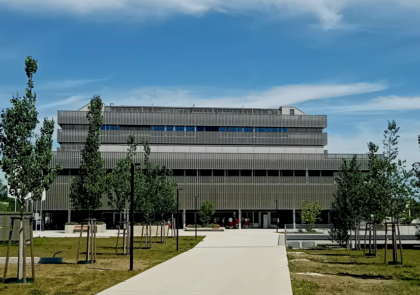
Illustration: (c) Valmet Oyj, all rights reserved.
Reference to this article
Ekman, J. & Kabiraj, S. 2026. Digital Transformation in Large Technology Projects: Why Organizational Change Matters. Cited and date of citation. Available at https://www.labopen.fi/lab-pro/digital-transformation-in-large-technology-projects-why-organizational-change-matters/