LAB Pro

This article explores how companies involved in construction sector can transform project finance from merely an accounting function to proactive tool for to gain strategic and competitive advantage. It argues that a unified, data-driven finance model enables a move beyond simple cost control, fostering a culture of shared knowledge and building a deeper, more valuable client partnerships. This shift allows companies to differentiate themselves based on transparency and long-term value rather than price alone.
Authors: Eveliina Keränen & Sajal Kabiraj
In the competitive construction industry, financial processes are often fragmented across multiple systems and spreadsheets. This leads to siloed data, manual rework and delayed decision-making, creating waste and eroding profitability. While the immediate consequences are budget overruns and reduced margins, the deeper strategic cost is a lost opportunity to build trust and create a sustainable competitive advantage. The solution lies in a socio-technical transformation that leverages technology to foster a smarter, more collaborative company culture. As Keränen (2026, 43) concludes in her research:
The need for structured, unified and user-friendly model is not merely theoretical: It stems directly from the organisation’s daily operations and the challenges it faces.
Building a Unified Foundation
The first step is to create a single source of truth by centralising financial processes within a company’s existing enterprise resource planning (ERP) system. This requires establishing a unified process workflow for all transactions and a standardised cost breakdown structure that is used consistently across all projects. When combined with an integrated information system that provides real time, role-based dashboards, the organisation gains clear, immediate visibility into the financial health of every project. This technical foundation is only the beginning; its true value is unlocked when it is used to systematically turn raw data into strategic wisdom.
Moving from Data to Strategic Wisdom
The journey from isolated data points to actionable strategy can be understood through the DIKW (data-information-knowledge-wisdom) pyramid (Rowley 2007, 164). A fragmented system leaves a company drowning in raw data (invoices, timesheets) without context. The journey up the pyramid begins by transforming the data into organised information. The standardised model automatically structures these raw inputs, allowing the team to answer fundamental what-questions, such as “What are we spending on materials vs. labour?” or “What is the current cost of an approved change order?”
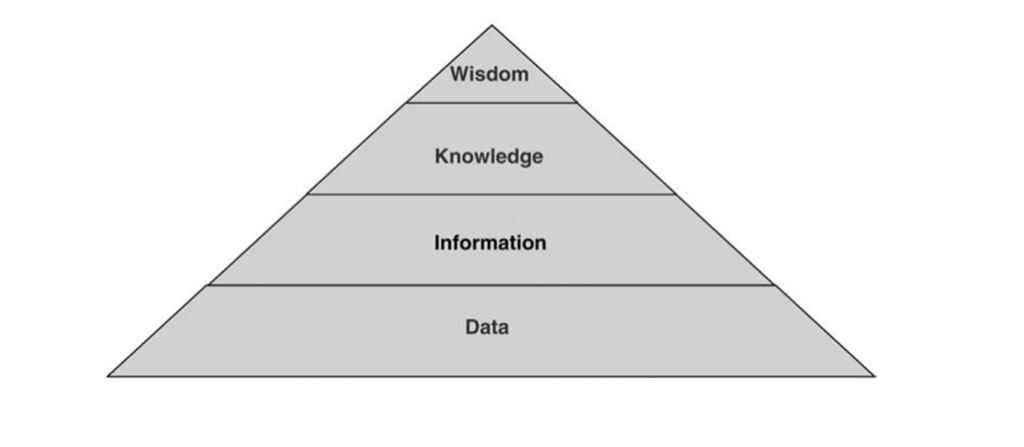
Figure 1. Rowley, J. 2007, 164. The DIKW hierarchy.
This organised information then becomes the foundation for creating shared knowledge, a stage where the human element is critical. Through structured monthly financial review meetings, participants (PM’s, controller’s and directors) analyse the data dashboards together. In this collaborative dialogue, they move beyond the what-question to answer the crucial why-questions: ” Why are our labour costs over budget? Was a specific material delay a onetime issue or a supplier problem?” Finally, over time, this accumulated knowledge, drawn from multiple projects, will foster organisational wisdom. The company moves from reactive problem solving to proactive strategy, using previous and real-time data to make smarter decisions about the future. Leadership can now identify systemic risks with certain partners or prove, with data, that specific upfront investments consistently reduce costly changes later (Keränen 2026, 54-55).
From Vendor to Strategic Partner
This internal journey up to DIKW pyramid has profound external impact. It equips the company to transform its client relationships and differentiate itself in ways that competitors focused solely on price cannot match.
Firstly, it enables a shift from opacity to radical transparency. By providing clients with clear, data backed reports, the conversation changes from defending costs to collaboratively progress. This builds immense trust. Secondly, it allows the demonstrate lifecycle value. Armed with data, the team can prove how higher initial investment in superior materials or systems will yield significant long-term savings for the client in maintenance and operations, reframing the company as a long-term asset advisor.
Together, these elements elevate the company from transactional vendor to an embedded strategic partner. When client experiences this level of insight and partnership, the value proposition extends far beyond the initial offer price, creating loyalty and securing future business (Porter 1985, 14-16). This agility to respond to the market with data-driven insights is a hallmark of resilient organisations (Doz and Kosonen 2008, 15, 42).
Gatti (2017) states project finance is a way to fund a single large asset or infrastructure project through a legally separate project company, with repayment mainly tied to the project’s own cash flows rather than the sponsors’ balance sheets.
It is therefore important how project finance developed, where it is used, and which sectors it serves, especially infrastructure and public-private partnerships. The central role of risk identification and allocation is important for the construction sector, since the success of the deal depends on matching each risk to the party best able to manage it. Advisors such as lawyers, engineers, and insurers are essential to structuring the deal and verifying assumptions. (Gatti 2017)
In conclusion, implementing a unified project finance model us more than a technical upgrade, it is a strategic imperative. It requires leadership commitment and willingness to foster a new culture of data driven collaboration and accountability. Project finance thus is a multidisciplinary initiative combining finance, law, and risk management to make large constructions projects possible. For companies willing to make this investment, the model provides the foundation not only for improved profitability and efficiency, but for building enduring and successful client partnerships and a powerful, sustainable competitive advantage.
References
Doz, Y. & Kosonen, M. 2008. Nopea strategia: Miten strateginen ketteryys auttaa pysymään kilpailun kärjessä. Helsinki: Talentum.
Gatti, S., 2017. Project finance. In Structured finance: Techniques, products and market. Caselli, S. & Gatti, S. (eds.). Second edition. Cham: Springer International Publishing. 27-58.
Keränen, E. 2026. Project Finance Model. Creating a Structured Model for Medium Size Construction Projects. Master Thesis. LAB University of Applied Sciences. Cited 16 May 2026. Available at https://urn.fi/URN:NBN:fi:amk-2026051612700
Porter, M. 1985. Competitive Advantage. Creating and Sustaining Superior Performance. New York : London: Free Press ; Collier.
Rawley, J. 2007. The wisdom hierarchy: representations of the DIKW hierarchy. Journal of Information Science. Vol. 33(2). Cited 7 May 2026 . Available at https://doi.org/10.1177/0165551506070706
Authors
Eveliina Keränen is a Master’s student in the Degree Programme in Business Innovation, Culture and Creativity at LAB University of Applied Sciences.
Sajal Kabiraj, PhD, works as Principal lecturer at Faculty of Business and Hospitality Management at LAB University of Applied Sciences.
Illustration: https://pxhere.com/en/photo/1571535 (CC0)
Reference to this article
From Cost Control to Strategic Partnership: Unlocking Value with a Unified Finance Model. 2026. LAB Pro. Cited and date of citation. Available at https://www.labopen.fi/en/lab-pro/from-cost-control-to-strategic-partnership-unlocking-value-with-a-unified-finance-model/