LAB Pro
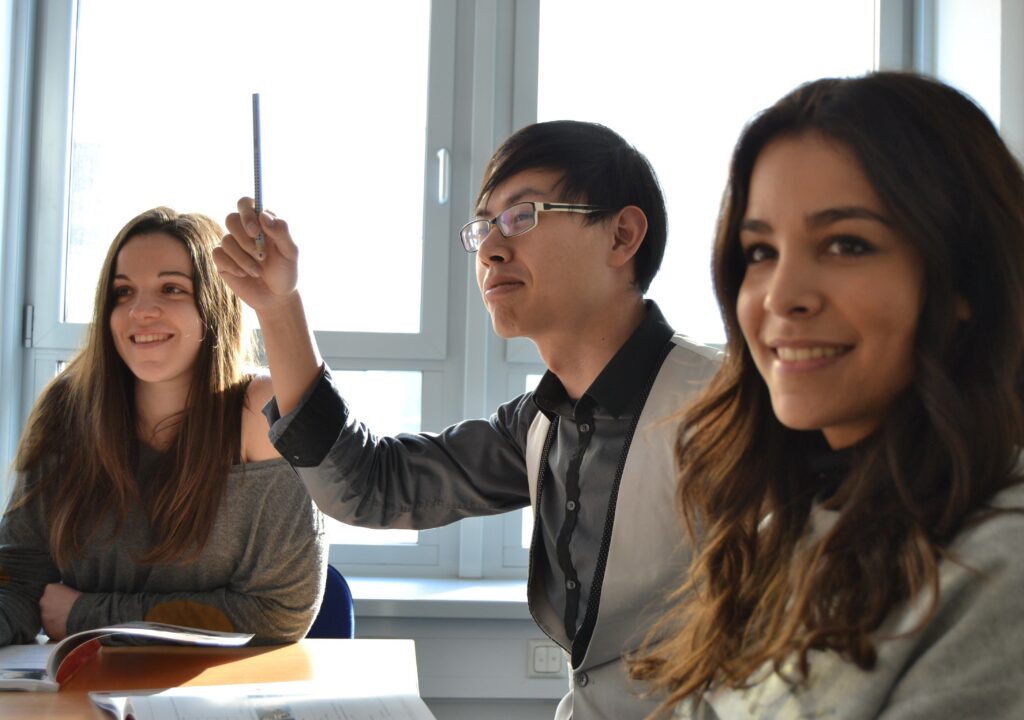
At campuses like LAB University of Applied Sciences in Lahti, international and Finnish speaking students use the same buildings, libraries and restaurants. However, they do not necessarily interact much in their everyday lives. Casual encounters are quite rare, and joint activities often attract mainly international students. Finnish students tend to stay within their own circles.
Authors: Shakhrom Gitteau & Tytti Lindeberg
This is not a new situation, and this issue is not unique to LAB; it has also been identified at other Finnish higher education institutions (see, for example, Sharma 2026; Harviala 2025). At LAB, it has been discussed for years, and there have been several attempts to bring students together, but the results have so far been rather limited.
Against this background, DiversityLab began its work in early 2026 as a cross-disciplinary network that promotes diversity, inclusion and equality. A key part of its work is creating opportunities for students and staff from different linguistic and cultural backgrounds to meet, collaborate and learn from one another.
Why aren’t students connecting?
The separation can be seen in several different ways. Degree programmes often have parallel groups with different schedules. Nursing students, for example, may take almost the same courses in Finnish and English language groups, but the two groups rarely have a chance to meet. Some courses do deliberately mix students for group work or projects, and these situations can create opportunities for interaction. Outside the classroom, however, it is much harder to get students to come together voluntarily. Language tandem courses, which are meant to give students a chance to practise language together, often struggle to find enough Finnish speaking participants. Cultural cafes and other open events also tend to attract more international students than Finnish students.
There are few possible reasons why Finnish students participate less. First, many of them already have established networks of family and friends around them. For them, university may mainly be a place to complete their studies rather than a place to meet new people or learn about other cultures. The idea that it is possible to gain international experience and make international connections without actually leaving Finland may also not be very familiar to everyone.
Language barrier or level may be another factor. Some Finnish students may feel shy or unsure about their English and worry about having to speak it in front of others. This can make joining a group of international students feel uncomfortable, especially if they feel that their English need to be fluent. International students, on the other hand, already use English every day as the main language of their studies, so they may feel more comfortable using it in these situations. In the same way, international students find it difficult to take part when an event is held in Finnish, and their willingness to participate can likewise be influenced by personality-related factors (Li & Bohndick 2026).
This separation has consequences for both sides. International students may miss regular opportunities to practise Finnish in everyday situations and to build the local connections that can help them feel part of the community and later find employment (Li & Bohndick 2026; Lu & Everson Härkälä 2024, 137). Meanwhile, Finnish students miss opportunities to develop intercultural skills, meet people from different backgrounds and build professional connections. Over three or four years of studying, these missed opportunities can add up.
Making interaction easier and more meaningful
If the aim is to bring students together, contact probably needs to be made easier rather than simply waiting for it to happen. One practical step could be to coordinate timetables more closely so that Finnish and English-speaking groups have more opportunities to be in the same place at the same time. Even short periods of shared time could make it easier for students to meet naturally, without putting pressure on them to immediately make friends or contacts.
Voluntary activities could also be presented differently. For example, cultural cafes do not necessarily have to be promoted only as places to practise language or have coffee. They could also be presented as opportunities to meet people, build networks and develop skills that can be useful in working life. For some students, seeing a clear benefit for themselves might make them more willing to participate.
Small incentives could help as well. A simple participation passport, some credits or stamp could record attendance at activities involving Finnish and international students. If participation could count for a small number of credits or some other form of recognition, it might give students an additional reason to take part. The activities would still be easy to join, but they would no longer feel like something that has nothing to do with their studies.
The format of the activities also matters. Simply putting a group of people in the same room and expecting them to start talking does not always work. Pair work, small mixed groups, simple tasks or prepared discussion topics can make the first conversation easier. Once people have something to talk about, continuing the interaction usually becomes less difficult.
One example of this approach is being piloted at LAB during the autumn of 2026 through DiversityLab. As part of DiversityLab’s efforts to bring together students and staff from different cultural backgrounds, a series of Dive to Diversity coffee gatherings will be organised in the communal spaces of both campuses. During the events, students from different countries and cultures introduce aspects of their own culture, while simple networking tasks encourage participants to meet new people and start conversations. Participants might, for example, be invited to introduce themselves to someone they have not met before and ask them a question. The aim is to make intercultural encounters feel natural, easy and enjoyable rather than requiring participants to take the first step on their own.
Sharing a same campus building is not enough to create real connections. If encounters are built into studies, supported by well-designed activities and recognised as valuable, students are more likely to step outside their familiar circles. The aim does not need to be immediate friendship between everyone. Even small, regular opportunities to meet can gradually make the campus a more connected community and ensure that both Finnish and international students benefit from studying side by side.
References
Harviala, J. 2025. International students in Finland and their integration into Finnish student culture. Bachelor’s thesis. Häme University of Applied Sciences. Cited 24 Sept 2026. Available at https://urn.fi/URN:NBN:fi:amk-2025052715920
Li, Z., & Bohndick, C. 2026. Influencing factors of international students’ social interactions at the host university: A systematic review. Educational Research Review. Vol 52, 100810. Cited 24 Sept 2026. Available at https://doi.org/10.1016/j.edurev.2026.100810
Lu, W., & Everson Härkälä, T. 2024. International student experience of employment integration in Finland. Research in Comparative and International Education. Vol. 19 (2), 133–152. Cited 24 Sept 2026. Available at https://doi.org/10.1177/17454999241238172
Sharma, A. 2026. From arrival to belonging: What international students can do. Student Life at the University of Turku. Cited 24 Sept 2026. Available at https://blogit.utu.fi/studentlife/from-arrival-to-belonging-what-international-students-can-do/
Authors
Shakhrom Gitteau is a student in integration training at Salpaus Further Education. He is completing a work-based learning period with DiversityLab at LAB University of Applied Sciences. His interests include student integration and interaction in international higher education.
Tytti Lindeberg is a Senior Lecturer at LAB University of Applied Sciences and a coordinator of the DiversityLab development group. Her areas of expertise include Finnish as a second language, workplace communication, and language awareness.
Illustration: https://pxhere.com/en/photo/1078565 (CC0)
Reference to this article
Gitteau, S. & Lindeberg, T. 2026. Bridging the gap: creating real connections between Finnish and international students. LAB Pro. Cited and date of citation. Available at https://www.labopen.fi/en/lab-pro/bridging-the-gap-creating-real-connections-between-finnish-and-international-students/