LAB Pro
LAB University of Applied Sciences is running the LAB-D program, which supports LAB staff in pursuing doctoral dissertations and in developing advanced academic expertise. The program was launched in January 2021 as part of LAB’s strategic action plan, with the goal of strengthening the knowledge base for LAB’s research, development, and innovation (RDI) activities and teaching competence.
Author: Sanna Tomperi
The LAB-D program supports doctoral work and enhances the RDI and teaching competencies of the LAB staff, thus building towards the future of the innovation-oriented university of applied sciences. LAB aims to be a university of applied sciences that drives working-life innovations by providing education closely connected to research, development, and innovation, and fully integrated into the RDI ecosystem. Success in demanding innovation work requires strong research competence and an international approach in both professional practice and network building.
Comprehensive support for doctoral studies
The LAB-D program offers participants various peer-support forums, including seminars, mentoring, sparring sessions, and scientific writing guidance for articles. In addition, the program encourages researchers to participate in international conferences and networking events.
LAB-D is implemented in close cooperation with LUT University’s doctoral school, LUT Academic Library, and the LAB Language Centre. This multidisciplinary collaboration ensures that participants receive comprehensive support throughout the research process – from preparing their research and postgraduate study plans to managing information acquisition and developing academic communication skills. The program takes into account both individual needs and the specific characteristics of research processes. Experts from the LAB community actively contribute to the program’s development and serve as key actors in its implementation and everyday practice.
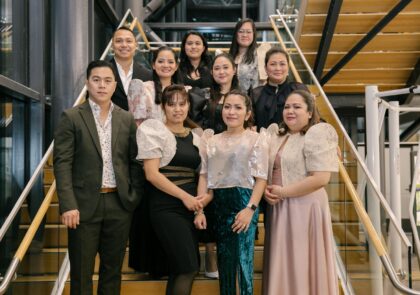
Currently, the program involves more than 40 LAB employees, about half of whom are pursuing their doctorates at LUT University. Participants range from advanced doctoral candidates to those just starting their doctoral studies. With advanced candidates, the goal is to complete their studies, while with beginners, the focus is on a smooth start.
Added value and significance for LAB and its staff
The Finnish Ministry of Education and Culture’s Internationalisation Vision 2035 stresses that research-based knowledge, active mobility, close academic cooperation, and interaction with the working world form the foundation for international collaboration across all sectors of society. (Finnish Ministry of Education and Culture 2020)
At the heart of LAB-D program is a strong commitment to enhancing the staff’s research competence. The LAB-D program supports the development of academic expertise among staff and thereby strengthens LAB’s RDI ecosystem. It creates an ecosystem where research, development, and innovation-driven, sustainable and responsible business collaboration are interconnected, creating impact, recognition, and visibility regionally, nationally, and internationally.
Voices from the LAB-D Program
A LAB lecturer participated in the program for peer support. She said the LAB-D Program provided just the right amount of pressure to advance her work, and exchanging feedback and ideas with peers was rewarding. She specifically mentioned learning to summarize her work in seminars and gaining ideas from others’ presentations. In her view, the academic path adds a new dimension to teaching at a university of applied sciences and opens doors to international collaboration. She currently holds a doctoral degree.
Summary
The LAB-D program strengthens the staff’s research competence and success in global research and development networks. It lays the groundwork for LAB’s strategic role in the European higher education landscape and builds capacity for future doctoral education models. The program supports LAB’s vision of being an innovation-oriented university of applied sciences that integrates research, development, and international collaboration into a cohesive and impactful whole. It is an excellent example of collaboration between a university of applied sciences and a university. The added value of collaboration is evident, as strengthening expertise is also key to enabling the growth and internationalisation of small and medium-sized businesses. At its core, the program is about empowering each individual’s personal growth and research journey, while reinforcing LAB’s position as a forward-looking, innovation-driven institution.
References
Finnish Ministry of Education and Culture. 2020. Vision for the international dimension 2035. Cited Nov 28th 2025. Available at https://okm.fi/en/vision-for-the-international-dimension-2035
Author
Sanna Tomperi is a Planning Officer with over 20 years of experience in higher education institutions and a strong background in industry. Proven expertise in international business and Research, Development and Innovation (RDI) projects. Certified pedagogical expertise through professional teacher education and practical experience. M.Sc. from the University of Oulu, Finland.
Illustration: LAB Press Images
Reference to this article
Tomperi, S. 2025. The LAB-D Program: Strengthening academic expertise and RDI capability at LAB. LAB Pro. Cited and date of citation. Available at https://www.labopen.fi/lab-pro/the-lab-d-program-strengthening-academic-expertise-and-rdi-capability-at-lab/