LAB Pro
Hackathons have evolved from niche tech gatherings into strategic tools for fostering innovation also in collaboration with educational institutions. By enabling rapid collaboration and experimentation, they help organizations move from open innovation toward disruptive breakthroughs with the help of educational institutions.
Author: Kristiina Brusila-Meltovaara
Innovation is no longer confined to traditional research and development departments; it thrives in dynamic, collaborative spaces where ideas can be tested rapidly. Hackathons—intensive events designed to solve problems through creativity and teamwork—have become a cornerstone of modern innovation practices. Positioned at the intersection of open and disruptive innovation, hackathons empower organizations to tap into external expertise, foster cross-disciplinary collaboration, and uncover breakthrough solutions (Brusila-Meltovaara 2025). Supported by academic research, hackathons are increasingly recognized as strategic tools for organizational learning and ecosystem development (Resch et al. 2025; Happonen et al. 2020; Happonen et al. 2022)
Hackathons align strongly with open innovation principles, as they encourage knowledge sharing across organisational boundaries and leverage external ideas to stimulate novel solution development (Brusila-Meltovaara et al. 2024). At the same time, hackathons can produce disruptive outcomes by enabling experimentation and unconventional thinking within a low-risk environment. Hackathons often function as innovation intermediaries, bringing together diverse stakeholders and facilitating co-creation processes that accelerate idea generation and early-stage implementation. This intermediary role is evident in studies describing how hackathons connect companies, universities and participants in shared problem-solving activities (Komssi et al. 2015; Happonen et al. 2020).
Benefits of Hackathons
Hackathons provide advantages within educational settings, providing a highly engaging and practice-oriented learning experience. The intensive, time-bounded structure of hackathons supports rapid learning cycles in which students iteratively create, test and refine ideas, thus strengthening problem-solving and creative thinking skills. This dynamic, hands-on format aligns well with contemporary pedagogical goals that emphasise active learning. (Komssi et al. 2015) Resch, Freudhofmayer and Martínez-Usarralde (2025) emphasise that hackathons function as powerful pedagogical tools as they foster authentic engagement, promote student agency and support the development of transversal competencies such as teamwork, communication and critical thinking. In addition, youth-oriented hackathons have been shown to empower participants by encouraging ownership of the innovation process, enhancing their self-confidence and stimulating long-term motivation (Rys 2025).
Hackathons also play a significant role in strengthening collaboration between educational institutions, industry stakeholders and societal actors. Happonen et al. (2020) demonstrate that when universities and companies co-organise hackathons, students gain exposure to authentic real-world challenges, including sustainability and circular economy issues, thereby increasing the relevance and applicability of their learning. Such events allow students to work with emerging technologies and industry mentors, creating a bridge between academic knowledge and professional practice. Furthermore, hackathons serve as early-stage incubators for innovative concepts and business model exploration, offering students a low-risk environment in which to test digital solutions and entrepreneurial ideas (Happonen et al. 2022). Nolte et al. (2020) add that participating in these events familiarises students with organisational innovation processes and enhances their readiness for collaborative, multidisciplinary work environments. Hackathons thus constitute a promising educational methodology that enhances skill development, deepens real-world learning and prepares students to contribute meaningfully to future innovation ecosystems.
Challenges and limitations
Hackathons, despite their popularity, face several challenges that may undermine their long-term effectiveness. Komssi et al. (2015) highlight that the highly compressed timeframe of hackathons often results in superficial solutions, as participants must prioritise speed over depth, limiting the extent to which problems can be thoroughly explored. Time pressure can also lead to uneven team dynamics, where individuals with stronger technical competence dominate, reducing the diversity of ideas and participation. The alignment of motivations among company representatives, students and academic partners can furthermore be difficult to achieve, which may weaken engagement and diminish the relevance or applicability of developed concepts. Thus even promising prototypes may not fully correspond to organisational needs, reducing their feasibility for integration into real-world settings. (Happonen et al. 2020)
A further limitation concerns the long-term sustainability and implementation of hackathon outputs. Ideas generated during hackathons fail to progress beyond the event due to ambiguity regarding ownership, limited follow-up structures and insufficient organisational commitment to further development. This creates a gap between creative experimentation and actual innovation adoption. (Nolte et al. 2018) While hackathons can stimulate early innovation seeds and business model concepts, their impact on sustainability and circular economy objectives remains limited if post-event support mechanisms are weak or absent. Without clear pathways for continuation, hackathons risk producing short-lived outcomes rather than meaningful contributions to organisational innovation strategies. (Happonen et al. 2022). It should be noted that hackathons are inherently constrained tools that require careful planning, strategic alignment and strong post-event processes to reach their full potential.
Case Examples
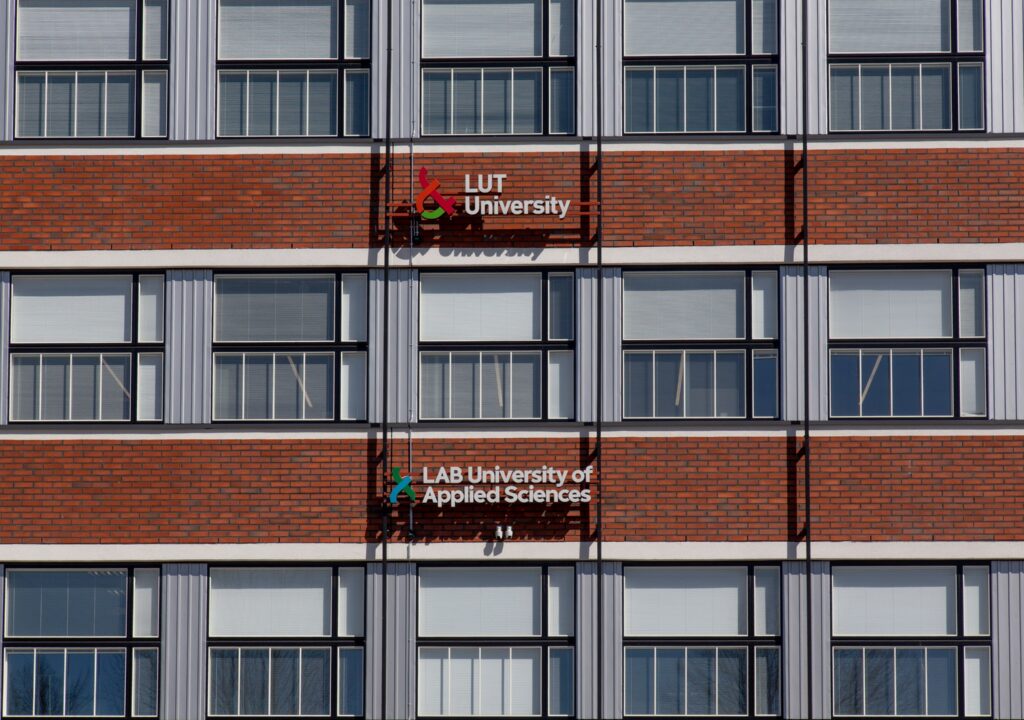
LAB University of Applied Sciences has actively promoted hackathons as part of its innovation ecosystem, engaging students, companies, and public organizations in collaborative problem-solving. Similarly, LUT university study highlights hackathons in energy and digital sectors as effective platforms for addressing complex challenges through co-creation.
Hackathons have become practical showcases of how open innovation principles translate into real-world impact. In Lahti, for example, the Nature-Positive & Economic Vitality Hackathon, brought students together to co-create solutions for regional vitality and sustainability. The event was organized by LAB and LUT in November 2025. Over two intensive days, participants developed concepts that combined ecological business models with economic growth, integrating perspectives from design, technology, and well-being (LAB University of Applied Sciences & LUT University 2025). LUT has also independently advanced hackathon-based innovation through events such as the Think Track Hackathon, organised in January 2025 in Kouvola. This three-day hackathon challenged students to develop new business concepts for regional development, demonstrating how LUT uses hackathon formats to stimulate entrepreneurship, cross-sector collaboration and digital innovation (LUT University 2025).
Summary
Hackathons are more than short-term events; they are instruments for fostering innovation across organizational and ecosystem levels. By combining open innovation principles with the potential for disruptive breakthroughs, hackathons enable organizations to remain agile and competitive in a rapidly changing environment. (Brusila-Meltovaara et al. 2024). Future directions could include hybrid formats, cross-sector collaboration, and integration with long-term innovation roadmaps.
References
Brusila-Meltovaara, K. 2025. Innovation types: From open to disruptive. LAB Focus. Cited 08 Dec 2025. Available at https://blogit.lab.fi/labfocus/en/innovation-types-from-open-to-disruptive/
Brusila-Meltovaara, K., Makkonen, P., Siakas, K., & Lampropoulos, G. 2024. Open Innovation Capabilities and Competences. In 19th European Conference on Innovation and Entrepreneurship (ECIE). Academic Conferences International. 110-117. Cited 08 Dec 2025. Available at https://papers.academicconferences.org/index.php/ecie/article/view/2487/2396
Happonen, A., Minashkina, D., Nolte, A., & Angarita, M. A. M. 2020. Hackathons as a company–University collaboration tool to boost circularity innovations and digitalization enhanced sustainability. In AIP Conference Proceedings. Vol. 2233(1), 050009. AIP Publishing LLC. Cited 08 Dec 2025. Available at https://doi.org/10.1063/5.0001883
Happonen, A., Nolte, A., Bystriakova, N., Santti, U., & Kärhä, K. 2022. Study on hackathons for new innovation seed and business model development needs in digitalization driven sustainability, circularity and environmentally friendly solutions demanding digitalizing societies. New Innov. Econ. Bus. Manag, 1-29. Cited 08 Dec 2025. Available at https://doi.org/10.9734/bpi/niebm/v4/14443D
Komssi, M., Pichlis, D., Raatikainen, M., Kindström, K., & Järvinen, J. 2014. What are hackathons for? IEEE Software, 32(5), 60-67. Cited 08 Dec 2025. Available at https://ieeexplore.ieee.org/abstract/document/6809711
LAB University of Applied Sciences & LUT University. 2025. Nature-Positive & Economic Vitality Hackathon. Cited 08 Dec 2025. Available at https://lut.jobteaser.com/fi/events/262539
LUT University. 2025. Students will envision new businesses at the Kouvola Think Track Hackathon. Cited 08 Dec 2025. Available at https://www.lut.fi/en/news/students-will-envision-new-businesses-kouvola-think-track-hackathon
Nolte, A., Pe-Than, E. P. P., Filippova, A., Bird, C., Scallen, S., & Herbsleb, J. D. 2018. You Hacked and Now What? -Exploring Outcomes of a Corporate Hackathon. Proceedings of the ACM on Human-Computer Interaction, 2(CSCW), 1-23. Cited 08 Dec 2025. Available at https://alexandernolte.github.io/download/Nolte%20et%20al.%20(2018)%20You%20Hacked%20and%20Now%20What%20-%20Exploring%20Outcomes%20of%20a%20Corporate%20Hackathon.pdf
Resch, K., Freudhofmayer, S., & Martínez-Usarralde, M. J. 2025. A promising methodology. Assessing the pedagogical value of hackathons. Active Learning in Higher Education, 14697874251330793. Cited 8 Dec 2025. Available at https://doi.org/10.1177/14697874251330793
Rys, M. 2025. Youth Hackathons: Empowering the Next Generation of Innovators. European Journal of Education. Vol. 60(3), e70176. Cited 08 Dec 2025. Available at https://doi.org/10.1111/ejed.70176
Author
Kristiina Brusila-Meltovaara, a Principal Lecturer at the Technology Faculty of LAB UAS, has extensive industry experience and experience in lecturing, curriculum development, e-learning, development of teaching materials, and commercializing training and university services. Current research interests include innovation, commercialization, leadership and management, ethics, sustainability and the leadership thereof.
Illustration: Sanna Henttonen
Reference to this article
Brusila-Meltovaara, K. 2026. Hackathons: Bridging Education and Innovations. LAB Pro. Cited and date of citation. Available at https://www.labopen.fi/lab-pro/hackathons-bridging-education-and-innovations/