LAB Pro
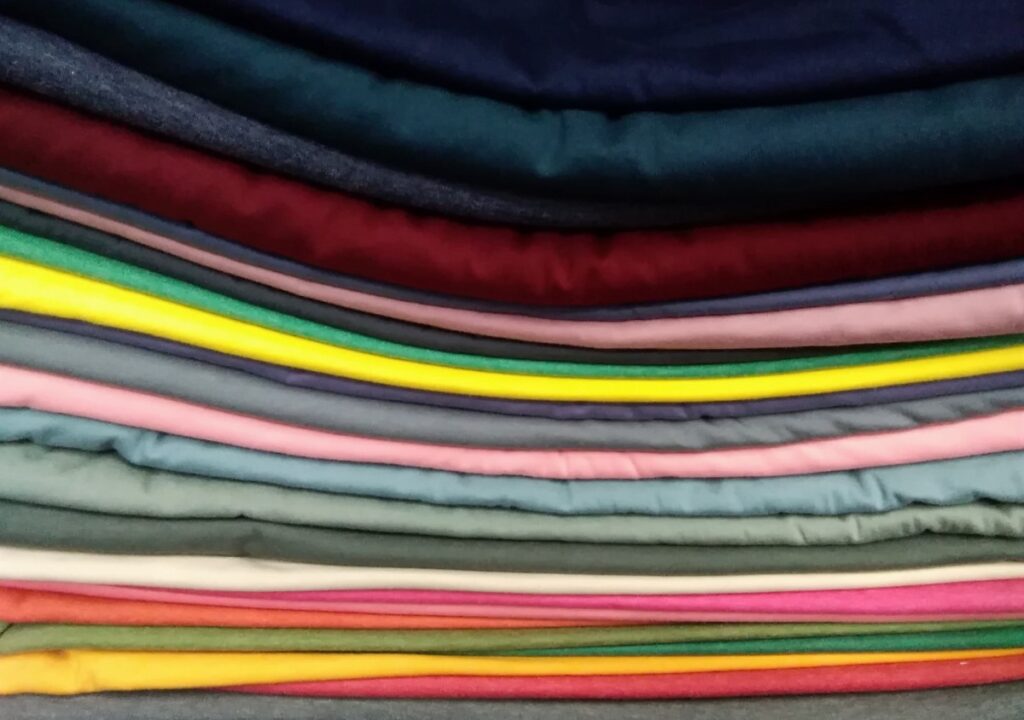
The presence of substances harmful to the environment and people in textiles makes it difficult to recycle them. For example, there are many types of flame retardants used in consumer products and some of them are restricted by legislation. When processing textile waste, certain limit values must not be exceeded.
Author: Raisa Pajarinen
The project OmniTexLux– AI-tehostettu tekstiilitunnistus, which is a research project of LAB University of Applied Sciences funded by the ERDF 2021-2027, designs and builds a measurement protocol for textile recognition using hyperspectral camera, develops a machine learning model for analyzing the measured data, and builds a digital library for textile recognition (LAB University of Applied Sciences 2025). As part of the project, a method for identifying flame retardants in textiles is being developed using a gas chromatograph mass spectrometer (GC-MS).
Adding flame retardants to textiles, their classification and behavioral mechanisms
Textiles can be made fire retardant using two main methods. First, flame retardants can be mixed with the raw textile materials before spinning, which increases the washing resistance of the product, but the costs may increase, and the mechanical properties of the fiber may decrease. Another option is that fire retardant properties are added after the textile is formed by coating, spraying, impregnating or pad-dry-cure method. Sol-gel treatment, nanoparticle adsorption, layer-by-layer self-assembly method, plasma treatment and graft copolymerization modification method are advanced techniques. (Jin et al. 2023, 4.) Flame retardants can be classified as not chemically bound to the product or chemically bound to the product, in which case they are reactive and do not leave the product. They can also be divided into categories based on their chemical composition: for example, halogenated, inorganic, phosphorus-based or nitrogen-based flame retardant. (Cordner 2016, 21–23.)
Flame retardants stop or slow down the burning process by affecting them physically or chemically. Combustion needs heat, oxygen and burning material. Certain materials added to the product, such as halogens or phosphorus do not allow the temperature of the gases to rise to the pyrolysis temperature. Metal hydroxides and carbonates produce non-flammable by-products during pyrolysis, such as water vapor or carbon dioxide, which dilute the fuel and cool the product through the endothermic decomposition of the flame retardant. Expandable materials and nanocomposites form carbon, which acts as a barrier to heat and mass transfers, and prevent the release of combustible material as fuel. Certain flame retardants cause a decrease in the oxygen concentration in the flame area by releasing non-combustible gases. (Sharmin & Zafar 2019.)
Risk management of flame retardants in textiles
Assmuth et al. (2011) have compiled information on many substances added to textiles that can cause environmental and health risks. Most flame retardants are dangerous additives and contain chlorine, bromine, formaldehyde, phosphorus and nitrogen. Brominated fire retardants have been used in curtains, carpets, mattresses and upholstery, such as polybrominated biphenyls, polybrominated diphenyl ethers, and hexabromocyclododecane, which are persistent, toxic, cause chronic effects even in small doses, might be bioaccumulative and might form other toxic reaction products, such as brominated dioxins.
The EU’s Water Framework Directive and HELCOM’s Baltic Sea Action Plan define priority substances. Some of them are used in the Finnish textile industry or may occur in imported textile products. Pentabromodiphenyl ether, decabromodiphenyl ether, and hexabromocyclododecane are not used in the Finnish textile industry, but they may be present in imported textile products. They dissolve in wastewater when textiles are washed, evaporate into the air during use, appear in the leachate and air of landfills, are released from waste deposits into wastewater and from waste incineration plants into the air. Textiles imported from outside Europe are not regulated as precisely as textiles manufactured in the EU. Even within the EU, there are gaps and variations between certain risks and countries, as well as with the implementation and monitoring of regulations. In Finland, the legislation regarding textile chemicals is stricter than in non-EU countries but imported textiles containing dangerous chemicals can still be sold in Finland, with a few exceptions. (Assmuth et al. 2011.)
Various environmental labels guide textile manufacturers to offer more environmentally friendly products and consumers and professional buyers to identify more environmentally friendly textiles. In the criteria for environmental labels, such as the Nordic Swan label, the EU Eco-label certification, the Oeko-Tex standard 100 label, the Good Environmental Choice label, and the GuT (Gemeinschaft umweltfreundlicher Teppichboden) label, there are mentions of the use of flame retardants in textiles. (Assmuth et al. 2011.)
Developing a method to identify PBDEs in textiles
The recycling of textiles is hindered by flame retardants as EU Regulation (2019/1021) limits their use, and restrictions must also be considered when handling waste that contains persistent organic pollutants. The concentrations of flame retardants must not exceed limit values, so methods must be developed to identify flame retardants in textiles. LAB University of Applied Sciences has started developing a method for identifying some of the most important polybrominated diphenyl ethers (PBDEs) using GC-MS (Image 1).
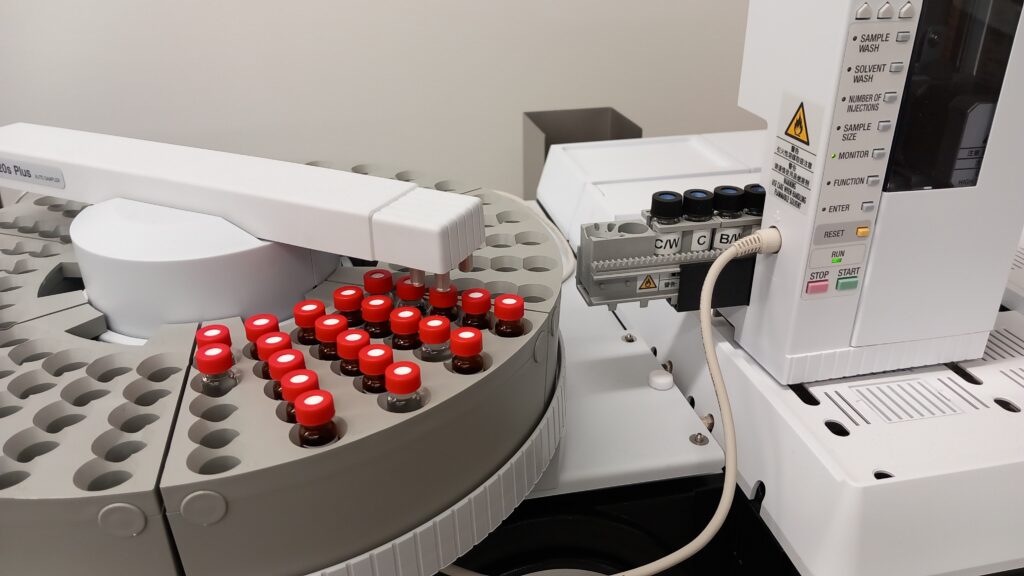
Image 1. LAB University of Applied Sciences has a gas chromatograph mass spectrometer (Image: Raisa Pajarinen)
European Food Safety Authority EFSA (2011) has listed eight congeners that are the most interesting PBDEs contaminating the food chain:
- BDE-28
- BDE-47
- BDE-99
- BDE-100
- BDE-153
- BDE-154
- BDE-183
- BDE-209.
Polybrominated diphenyl ethers (PBDEs) are additives used in plastics, textiles and electronics, which are now everywhere in the environment, where they also accumulate in animals, feed and foodstuffs, and therefore also in humans. Humans are mostly exposed to BDE-47 and BDE-209 through food, but exposure to BDE-99 through food is what can cause most health problems. PDBEs especially affect liver, thyroid hormone homeostasis, reproduction and nervous system. (European Food Safety Authority EFSA 2011.)
Zhang & Rhind (2011) developed a method to determine polybrominated diphenyl ethers and polychlorinated biphenyls in sheep serum using solid-phase extraction and a gas chromatograph mass spectrometer. A SPE cartridge of Strata-X and dichloromethane was found to be the most suitable for extracting the sample. The clean-up was performed with 2 g of acid silica/silica and isohexane, and the denaturation with formic acid. The standard SFS-EN ISO 17881-1 (2016) gives instructions to determine brominated flame retardants in textiles using ultrasonic generator with toluene, internal standards and GC-MS. Among other things, by utilizing this information, the most suitable method can be developed.
Green options are needed for flame retardants
The use of bio-based materials as environmentally friendly, effective and non-toxic flame retardants has attracted attention, because they are inexpensive, there are many types available, and they are easy to obtain. For example, chitosan, lignin, cyclodextrin and starch contain polyhydroxide groups and can be used as carbon sources in intumescent flame retardants. Phytic acid and dopamine hydrochloride can chelate with transition metals, which means very good fire protection and smoke formation. In addition, DNA, a biomacromolecule consisting of phosphoric acid, pentacarbonyl and nitrogen-containing bases, is a natural intumescent flame retardant. (Wang et al. 2023.) It is also noteworthy that compared to synthetic materials, cotton and wool are naturally more fire resistant, and wool does not even need flame retardants (Assmuth et al. 2011).
References
Assmuth, T., Häkkinen, P., Heiskanen, J., Kautto, P., Lindh, P., Mattila, T., Mehtonen, J. & Saarinen, K. 2011. Risk management and governance of chemicals in articles. Case study textiles. Helsinki: Finnish Environment Institute. The Finnish Environment; 16/2011. Cited 7 Sep 2025. Available at http://hdl.handle.net/10138/37055
Cordner, A. 2016. Toxic safety: flame retardants, chemical controversies, and environmental health. New York, New York: Columbia University Press. Cited 7 Sep 2025. Available at https://lut.primo.exlibrisgroup.com/permalink/358FIN_LUT/b5ag28/alma991970103206254
European Food Safety Authority EFSA. 2011. Scientific Opinion on Polybrominated Diphenyl Ethers (PBDEs) in Food. EFSA Journal. Vol 9 (5). Cited 20 Nov 2025. Available at https://efsa.onlinelibrary.wiley.com/doi/epdf/10.2903/j.efsa.2011.2156
Jin, L., Ji, C., Chen, S., Song, Z., Zhou, J., Qian, K. & Guo, W. 2023. Multifunctional Textiles with Flame Retardant and Antibacterial Properties: A Review. Molecules. Vol. 28, 6628. Cited 4 Sep 2025. Available at https://doi.org/10.3390/molecules28186628
LAB University of Applied Sciences. 2025. OmniTexLux – AI-tehostettu tekstiilitunnistus. Cited 20 Nov 2025. Available at https://lab.fi/fi/projekti/omnitexlux-ai-tehostettu-tekstiilitunnistus
Regulation (EU) 2019/1021 of the European Parliament and of the Council of 20 June 2019 on persistent organic pollutants (recast). Official Journal of the European Union. Cited 7 Sep 2025. Available at https://eur-lex.europa.eu/eli/reg/2019/1021/2025-10-15
SFS-EN ISO 17881-1. 2016. Textiles. Determination of certain flame retardants. Part 1: Brominated flame retardants. Helsinki: Suomen standardoimisliitto.
Sharmin, E. & Zafar, F. 2019. Introductory Chapter: Flame Retardants. Cited 10 Nov 2025. Available at https://www.intechopen.com/chapters/65125
Wang, T., Yao, D., Yin, G., Jiang, Y., Wang, N. & Wang, D. 2023. Gallic acid-iron complex modified magnesium hydroxide and its effect on flame retardancy of EVA. Advanced Industrial and Engineering Polymer Research. Vol. 6, 172–180. Cited 14 Nov 2025. Available at https://doi.org/10.1016/j.aiepr.2022.12.003
Zhang, Z. & Rhind, S. 2011. Optimized determination of polybrominated diphenyl ethers and polychlorinated biphenyls in sheep serum by solid-phase extraction–gas chromatography–mass spectrometry. Talanta.Vol. 84 (2), 487–493. Cited 2 Oct 2025. Available at https://doi.org/10.1016/j.talanta.2011.01.042
Author
Raisa Pajarinen is a Development Engineer at the Technology unit of LAB University of Applies Sciences.
Illustration: https://pxhere.com/fi/photo/1585095 (CC0)
Reference to this article
Pajarinen, R. 2025. Determination of flame retardants in textiles. LAB Pro. Cited and date of citation. Available at https://www.labopen.fi/en/lab-pro/determination-of-flame-retardants-in-textiles/