LAB Pro

Case-based teaching is widely used in higher education to connect theoretical knowledge with realistic professional situations. In professional communication courses, case-based assignments are expected to support the development of communication skills that students will need in their future working life. This article examines the implementation of communicative case-based assignments on the course English for professional development and discusses pedagogical challenges encountered in their implementation.
Author: Olesia Kullberg
Case-based teaching methods bring an understanding of the future work environment and realistic challenges that a student might face after graduation. Cases present the opportunity to connect theoretical knowledge to practical applications within the safe environment of a university course. Students are also usually motivated to work on cases, and they often mention this in their course feedback. However, case-based learning has several pitfalls, for example the superficiality of learning, when students stay at the level of reusing the information they already know instead of creating new information. Another possible drawback is insufficient pedagogical planning of the case materials, which leads to chaotic student work and unclear results.
Case-based assignments for developing oral communication skills
From the perspective of professional communication university courses, case-based assignments should be focused on the development of communication skills simulating possible communicative tasks that students will encounter in their future careers. It is needless to say that completing communicative case-based assignments requires, among other skills, the ability to improvise, use one’s imagination, and see the situation from the perspective of another person. While these abilities and skills are very natural for some students, most of the current university students lack them, which might become a barrier to achieving the assignments’ learning objectives.
This article describes the experience gained from teaching the course English for professional development for Industrial engineering and management students. The course contains three simulated cases: The global job interview challenge, Teamwork challenges, and Ethical dilemma in automation. Case materials include a description of the situation, the current challenge, and some related documentation. Based on the materials of the case, students participate in role-play discussions, deliver oral and written reports, as well as write reflection essays.
Unexpected challenges
Even though in their reflection essays many students mentioned improving their communication skills and creating a better understanding of workplace communicative challenges through working on course’s cases, the practical implementation of communicative case-based assignments faced several challenges.
The development of oral communication skills requires active and regular participation in live conversations with others, where one can demonstrate their ability to deliver a prepared speech (e.g. opening statement), as well as their skills for maintaining a spontaneous discussion on the topic. Thus, each case of the course included a discussion-based assignment, that was meant to happen during a lesson organized on campus or in Zoom. However, due to the need for flexibility caused by possible overlapping of lectures, or other personal matters that students might encounter, the possibility of recording a video was added as an opportunity to compensate for absence. The latter unfortunately led to many students completing video assignments instead of attending lessons. Thus, the idea of a live spontaneous discussion was not realized for many students.
Learning through case-based assignments presupposes thorough preparation and studying the materials of the case. For communicative case-based assignments there might appear a misunderstanding, when students assume that learning mainly happens through communication during lesson discussions. This is where the danger of using only old knowledge appears: if a student does not study case materials before the lesson, participation in oral discussion stays on a superficial level and the learning outcomes of such participation stay relatively low.
Generative Artificial Intelligence (GenAI) tools provide an extremely useful resource for students to prepare for case-based discussions, as they allow them to explore different scenarios and to examine the materials from different perspectives. All cases of the course involved clear instructions for the required use of GenAI. However, writing the script of speeches or discussions was always forbidden. Despite the instructions, some students used GenAI for scripting their answers. There was a clear shortcut that some students seemed to take, and it even seemed that it was due to their belief that they can outsource tasks to GenAI that they decided to skip studying case materials and either came to the lesson unprepared or created a video. In both cases, their participation in communicative assignments (oral reports or video assignments) was relied heavily on the use of GenAI as a writer of their speech.
Reassessment of teaching approaches
It is obvious that all the above-mentioned aspects result in inefficient studying practices and create a low probability of students developing their communication skills through case-based assignments.
The experience of implementing communicative case-based assignments on the English for Professional Development course demonstrates that certain teaching practices and course policies require critical update for the course objectives. While flexibility and GenAI tools offer valuable support for learning, they can also unintentionally weaken students’ engagement, preparation, and authentic participation in live interaction. Reduced attendance, superficial engagement with case materials, and the outsourcing of communicative tasks to GenAI all contribute to learning practices that undermine the intended outcomes of communicative cases. This calls for a reassessment of how communicative case-based assignments are designed, facilitated, and assessed in environments where flexibility and GenAI support increasingly shape students’ learning practices.
Author
Olesia Kullberg is senior lecturer of English language and professional communication at a joint Language Centre of LUT and LAB
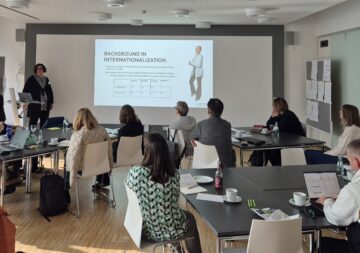
Illustration: https://pxhere.com/fi/photo/1629587 (CC0)
Reference to this article
Kullberg, O. 2026. Communicative Case-Based Assignments in Higher Education: Pedagogical Challenges in the Age of Flexibility and GenAI. LAB Pro. Cited and date of citation. Available at https://www.labopen.fi/en/lab-pro/communicative-case-based-assignments-in-higher-education-pedagogical-challenges-in-the-age-of-flexibility-and-genai/