LAB Pro

Conversations around Artificial Intelligence (AI) based educational technology (EdTech) are currently storming. Discussions vary between critical thinking and optimism. Others see AI being as a solution to the cross-pressure of tightening funding and educational pressures. Other ones emphasize in AI’s risks.
This article opens discussion based on academic literature, and gives an example of combination of critical, analytical and creative thinking when developing a contextual, generative AI based EdTech capability.
Author: Paula Valkonen
A large ship turns slowly: opportunities and criticism
Research community recognizes the artificial intelligence’s potentiality in helping teachers with workload challenges. AI might bring more time and calendar space for focusing those work tasks which especially needs teachers’ special expertise (Fitria 2021, 134). A possibility to offer and get learning support whenever it’s needed is one of the biggest pros of generative AI EdTech capability. However, the new technology solutions’ development and use should base on strong academic evidence, and the education community should consciously minimize the potential risks of AI tools’ use (Bauer et al. 2025, 1).
On the other hand, also risks are recognized: AI itself is seen being a risk from information security perspective (Li & Geng 2025, 1-15). AI’s use might also cause stress (Li & Geng 2025). In addition, the teachers are sometimes worried about teacher-learner-interaction (e.g., does AI reduce human expertise, or what is the technology’s role in teaching and learning), or how to use AI as a part of their work because of lack of guidelines (Giannakos et al. 2025, 2536-2537; Ninaus & Sailer 2022, 1-2).
At the same time when the academic literature concentrates in the risks and possibilities, the Finnish higher education institutions already make things happen. For example, they provide tips and AI-based tools for students and teachers (University of Turku Library 2026; LAB University of Applied Sciences 2025; University of Helsinki Library 2026; Aalto University Learning Services LES 2025; University of Helsinki Strategic Services for Teaching 2025).
Both critical and optimistic ways of thinking are needed
Creative and analytical minds seem to have quite many similarities. Maybe because of our education and work experience in different fields, we use different thinking skills and practices (e.g., analytical or critical thinking, creative thinking, design thinking, etc.) However, the different kinds of thinking ways are carefully linked together. The critical thinking needs analytical and creativity thinking skills, and creativity needs critical thinking skills (Bailin 1987, 23-30). When creating innovations, critical thinking skills are crucial, when again critical thinking and creative thinking skills are important when somebody is solving problems (Bailin 1987, 27; Ülger 2016, 701, 705). Exactly the same thinking systems work for example when we recognize and solve potential challenges of contextual AI based EdTech capability’s development.
Why the contextual AI based EdTech capability’s development is so important? A learner and a teacher are main actors in an education setting. The teacher wants to use his/her expertise to help a student to learn, and the student’s focus is on learning. Because different kinds of thinking ways are linked together, both analytical and creative environments’ actors might need a possibility to get support for their thinking processes exactly when they feel that they need it. Thinking or a need for thinking support doesn’t look at a clock. This doesn’t concern only the design thinking, but also all kinds of thinking. For example, a contextual AI based EdTech could give support for critical thinking and problem-solving, which both are essential skills for students nowadays in this constantly changing world (Bauer et al. 2025, 45; Greiff et al. 2014, 7).
Speculative design: Combination of critical and creative thinking
Anthony Dunne and Fiona Raby, the speculative design ambassadors, present their thoughts about the role and possibilities of speculations and dreams as a part design processes in their book Speculative everything (Dunne & Raby 2024). According to them, the imagination, and capabilities to think critically can be superpowers in activating discussions about possibly challenging topics. Speculative design can support designers’ creative thinking, and at the same time, give space to designers not to find ready solutions, but to look at phenomenon in new ways and from new perspectives. What if…? questions are one of the speculative design tools (Dunne & Raby 2024, 86-88).
Because speculative design seems being a promising help in problem-solving, let’s test What if…? questions. By doing that it’s possible to organize the thoughts about generative AI capability development for educational environment: What if… key players in education environments, e.g., students, had a contextual generative AI based capability working nonstop around o clock as an important part of the collaboration between students and teachers? What if… the contextual generative AI based capability could streamline students’ learning and whole organization’s processes, and lighten the teachers’ workload?
After this critical thinking exercise, it seems that contextual generative AI based EdTech capability could support with thinking and make learning and teaching processes more intensive and effective that earlier. In addition, the earlier mentioned academic research findings support this assumption. The contextual generative AI based EdTech capability is an excellent opportunity for higher educational institutes. Especially, if the potential risks, such as privacy or security, are considered in development decisions.
References
Aalto University Learning Services LES. 2025. Tips for teachers on using artificial intelligence in teaching. Cited 11.2.2026. Available at https://www.aalto.fi/en/services/tips-for-teachers-on-using-artificial-intelligence-in-teaching
Bailin, S. 1987. Critical and creative thinking. Informal logic. Vol. 9(1). Cited 11.2.2026. Available at https://ojs.uwindsor.ca/index.php/informal_logic/article/view/2656
Bauer, E., Greiff, S., Graesser, A.C., Scheiter, K. & Sailer, M. 2025. Looking Beyond the Hype: Understanding the Effects of AI on Learning. Educational Psychology Review. Vol. 37(2), 45. Cited 11.2.2026. Available at https://doi.org/10.1007/s10648-025-10020-8
Bewersdorff, A., Zhai, X., Roberts, J. & Nerdel, C. 2023. Myths, mis-and preconceptions of artificial intelligence: A review of the literature. Computers and Education: Artificial Intelligence. Vol. 4, 100143. Cited 11.2.2026. Available at https://doi.org/10.1016/j.caeai.2023.100143
Dunne, A. & Raby, F. 2024. Speculative Everything, With a new preface by the authors: Design, Fiction, and Social Dreaming. Paperback edition. Cambridge, Massachusetts, London, England: The MIT press.
Fitria, T.N. 2021. Artificial intelligence (AI) in education: Using AI tools for teaching and learning process. In Prosiding seminar nasional & call for paper STIE AAS. 134–147. Cited 11.2.2026. Available at https://prosiding.stie-aas.ac.id/index.php/prosenas/article/view/106
Giannakos, M., Azevedo, R., Brusilovsky, P., Cukurova, M., Dimitriadis, Y., Hernandez-Leo, D., Järvelä, S., Mavrikis, M. & Rienties, B. 2025. The promise and challenges of generative AI in education. Behaviour & Information Technology. Vol. 44(11), 2518–2544. Cited 23.1.2026. Available at https://doi.org/10.1080/0144929X.2024.2394886
Giray, L. 2024. Ten Myths about Artificial Intelligence in Education. Higher Learning Research Communications. Vol. 14(2), 1–12. Cited 11.2.2026. Available at https://files.eric.ed.gov/fulltext/EJ1454533.pdf
Greiff, S., Wüstenberg, S., Csapó, B., Demetriou, A., Hautamäki, J., Graesser, A.C. & Martin, R. 2014. Domain-general problem solving skills and education in the 21st century. Educational Research Review. Vol. 13, 74–83.
LAB University of Applied Sciences. 2025. AI-based tools policies. Cited 11.2.2026. Available at https://elab.lab.fi/en/completing-studies/rules-and-regulations/ai-based-tools-policies
Li, Y. & Geng, J. 2025. Fear of AI Taking Over: A Licence to Slack Off? The Impact of STARA Awareness on Employees’ Time Banditry Behaviour. Journal of East European Management Studies. Vol. 30(2), 38820. Cited 11.2.2026. Available at https://doi.org/10.31083/JEEMS38820
Ninaus, M. & Sailer, M. 2022. Closing the loop–The human role in artificial intelligence for education. Frontiers in psychology. Vol. 13, 956798. Cited 11.2.2026. Available at https://doi.org/10.3389/fpsyg.2022.956798
Rudolph, J., Ismail, F., Tan, S. & Seah, P. 2025. Don’t believe the hype. AI myths and the need for a critical approach in higher education. Kaplan Business School Australia Sydney, NSW. Cited 11.2.2026. Available at https://search.informit.org/doi/pdf/10.3316/informit.T2025091200002501930224078
Suárez-Guerrero, C., Rivera-Vargas, P. & Raffaghelli, J. 2023. EdTech myths: towards a critical digital educational agenda. Technology, Pedagogy and Education. Vol. 32 (5), 605–620. Cited 11.2.2026. Available at https://doi.org/10.1080/1475939X.2023.2240332
University of Helsinki Library. 2026. AI services. Cited 11.2.2026. Available at https://www.helsinki.fi/en/helsinki-university-library/using-collections/ai-services
University of Helsinki Strategic Services for Teaching. 2025. Using AI to support learning. Cited 11.2.2026. Available at https://studies.helsinki.fi/instructions/article/using-ai-support-learning
University of Turku Library. 2026. Library Guide to Artificial Intelligence. Cited 11 Feb 2026. Available at https://utuguides.fi/artificialintelligence
Ülger, K. 2016. The relationship between creative thinking and critical thinking skills of students. Hacettepe Universitesi Egitim Fakultesi Dergisi-Hacettepe University Journal of Education. Vol. 31(4), 695-710. Cited 11.2.2026. Available at https://doi.org/10.16986/HUJE.2016018493
Author
DSc (Tech), MA (Art and Des), Development Specialist Paula Valkonen belongs to the Digital Venturing team in LAB Institute of Design and Fine Arts. The multidisciplinary team combines piloting, research, and design thinking in the generative AI based EdTech capability’s development. Paula’s background is a combination of designer’s creativity and researcher’s analytical, critical thinking skills, and she uses them in her current position. Paula would like to thank the team colleagues Development Manager Antero Kivikoski and RDI Specialist Anniina Harjapää for the support with the writing process.
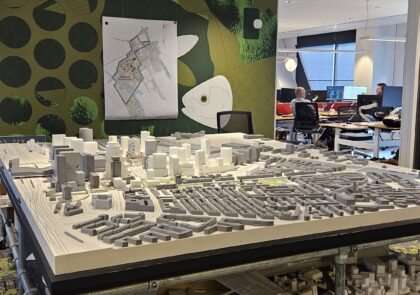
Illustration: Paula Valkonen (Image: Anniina Harjapää)
Reference to this article
Valkonen, P. 2026. Combining Critical and Creative Thinking with the Development of Educational Technology based on Contextual Generative AI. LAB Pro. Cited and date of citation. Available at https://www.labopen.fi/lab-pro/combining-critical-and-creative-thinking-with-the-development-of-educational-technology-based-on-contextual-generative-ai/