LAB Pro
Cooperation between small and medium-sized enterprises (SMEs) and higher education institutions (HEIs) creates innovation and growth, especially when these collaborations evolve from a one-time outreach into lasting partnerships. This article explores the journey of SME–HEI collaboration, from making initial contact to building a long-term relationship.
Author: Sofia Ramos
At LAB we aim to strengthen our partnerships with SMEs through our various projects. In the NOKKA project for example, SME–HEI cooperation directly supports the development of new capabilities, growth pathways, and research-based commercialization (LAB 2025). Through this project, we hope to communicate with SMEs the value of partnering with the academic world (through resources HEIs have to offer such as access to expertise, technology, and talent) and to offer practical guidance for entrepreneurs to cultivate sustained collaborations that drive innovation.
Companies increasingly turn to universities for early-stage R&D and innovative ideas, while universities seek to have more real-world impact (Atta-Owusu et al. 2021). For an SME, teaming up with an HEI can unlock world-class expertise and innovation that would otherwise be difficult to develop alone, especially when resources are limited (Rybnicek & Königsgruber 2019). Collaboration between the industry and academic worlds can be the first step toward game-changing regional innovation (Lundberg & Öberg 2021).
Why partner with a higher education institution?
Universities have experts, laboratories, and innovative ideas that can help solve real-world challenges. By partnering with HEIs, SMEs can overcome common limitations in R&D and commercialization (Atta-Owusu et al. 2021; Rybnicek & Königsgruber 2019). Some of the key benefits for SMEs include:
- Cutting-edge expertise and tech: Universities employ leading researchers and offer advanced research facilities. By partnering with a university, SMEs can access this brainpower and equipment without huge investments. For example, LUT and LAB have state-of-the-art facilities, boasting dozens of laboratories equipped with the latest machinery and technologies. Some of our laboratories include: the Laboratory of Intelligent Machines for mechatronics, the Laboratory of Thermal Engineering for multiphase processes, and the AI and HCI Behavioural Lab for studying human-computer interactions, just to mention a few.
- Joint innovation: Through collaborative RDI projects, SMEs share the costs and risks of innovation with academic partners, leading to new products or improved processes that neither partner could achieve alone. Examples of this type of project in Finland are Business Finland’s Research-to-Business (R2B) projects. LUT and LAB have plenty of expertise in implementing R2B projects, which aim to develop and commercialize new technologies.
- Access to funding: Many public grants and programs (from local government funds to European Union-level initiatives) favor SME–HEI partnerships. For SMEs, collaborating with HEIs can open doors to research funding and new product development opportunities. LAB has participated in hundreds of different projects funded at both regional and international levels.
- Talent pipeline: Collaborations connect SMEs with students and graduates through internships, project work, or hiring. In 2024, approximately 5,000 students graduated from both LUT/LAB, providing the next generation of experts across various industries. Events like DuuniDay (the biggest recruiting fair in Lappeenranta hosted by LUT/LAB) connect companies with emerging talent.
- Market insights: HEIs conduct research that can support SME competitiveness and strategic development by revealing new knowledge and trends. Last year alone, LAB had nearly 2,000 publications produced by researchers and RDI specialists.
In summary, a partnership with an HEI can significantly increase SME’s innovation capabilities. With this type of collaboration, small businesses gain expert knowledge and enhance their innovation development, while the university fulfills its mission of real-world impact and helping small businesses in their community (Atta-Owusu et al 2021).
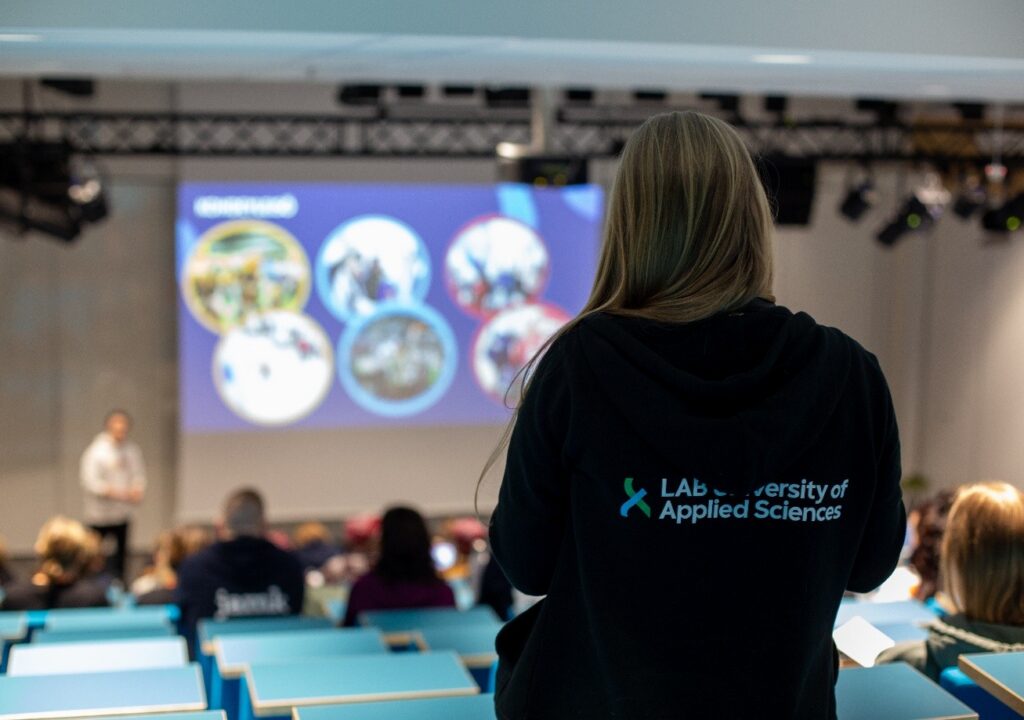
Image 1. SME-HEI collaboration increases innovation and growth. (Image: Sanna Henttonen)
Within the NOKKA project, LAB focuses on strengthening the growth and competitiveness of SMEs in South Karelia through capability-building, identifying new growth pathways, and supporting entrepreneurs in the commercialization of new solutions emerging from RDI (LAB 2025). In 2026, a series of workshops will be held in Lappeenranta, where SMEs will learn more about topics such as digitalization and AI, sales and marketing, and green transition, these themes have been explicitly requested by business owners themselves.
What next?
To initiate contact with an HEI, start by finding the right entry point. Many universities have a Technology Transfer Office (TTO) which can be contacted for cooperation and partnerships. At LAB we have: Green Campus Open (which supports co-creation and testing of new solutions with companies), Business Mill (which provides practical support and coaching for early-stage entrepreneurs), and StartHub (which helps develop early ideas into viable concepts).
Reaching out to these units with a clear value proposition can be the first step. Introduce your company, explain the challenge or opportunity you have identified, and express interest in collaborating. That is the way to find the right person within the HEI. If you have a specific research need (say, expertise in sustainable materials or data analytics), target universities known for those programs or projects. The initial outreach should be concise and concrete: who you are, what you seek, and why you thought of that specific HEI.
Building trust and aligning goals
Industry and academia sometimes operate at different paces and have different incentives; for example, a company might seek quick marketable results, whereas academia might lean more towards deep research (Fraser & Mancl, 2021). A successful partnership requires aligning expectations early. Be open about your objectives (e.g. developing a prototype, accessing lab testing, or getting student help on a project) and invite the HEI to share theirs (e.g., participation in RDI projects, publishing research, student training, real-world case studies). Building trust is also crucial. Through small wins, both the SME and the HEI gain confidence in the collaboration. As the relationship matures, what began as a single project can evolve into a long-term partnership.
Conclusion: A journey worth taking
Moving from a single outreach email to a long-term SME–HEI partnership is a journey of patience, communication, and mutual respect. But the rewards are substantial. When SMEs and HEIs collaborate, innovation grows.SMEs should remember that universities and applied science institutions want to collaborate. Supporting regional development is part of their mission. By taking the first step and reaching out, an SME owner might unlock not just a one-off project but a sustainable source of ideas, talent, and innovation for the future.
References
Atta-Owusu, K., Fitjar, R. D. & Rodríguez-Pose, A. 2021. What drives university-industry collaboration? Research excellence or firm collaboration strategy?. Technological Forecasting and Social Change. 173, 121084. Cited 20.1.2026. Available at https://doi.org/10.1016/j.techfore.2021.121084
Fraser, S. & Mancl, D. 2021. Exploring the dimensions of university-company collaborations: Research, talent, and beyond. 2021 IEEE/ACM 8th International Workshop on Software Engineering Research and Industrial Practice (SER&IP). IEEE. 57-64. Cited 20.1.2026. Available at https://doi.ieeecomputersociety.org/10.1109/SER-IP52554.2021.00017
LAB. 2025. NOKKA – Rapid commercial development of companies’ innovation activities with the help of research results project. LAB University of Applied Sciences. Cited 20.1.2026. Available at https://lab.fi/fi/projekti/NOKKA
Lundberg, H. & Öberg, C. 2021. Teachers, researchers, but not innovators? Rethinking university-industry collaboration. Journal of business & industrial marketing. 36 (13), 161-173. Available at https://doi.org/10.1108/JBIM-03-2020-0126
Rybnicek, R. & Königsgruber, R. 2019. What makes industry–university collaboration succeed? A systematic review of the literature. Journal of business economics. 89 (2), 221-250. Cited 20.1.2026. Available at https://doi.org/10.1007/s11573-018-0916-6
Author
Sofia Ramos works as an RDI Specialist at LAB University of Applied Sciences, helping SMEs navigate innovation, commercialization, and growth. She focuses on building bridges between companies and the academic world. Sofia is passionate about making research practical and useful for entrepreneurs.
Illustration: HEIs in Finland are eager to work with SMEs, not just large companies. (Image: Teemu Leinonen)
Reference to this article
Ramos, S. 2026. When two worlds collide: The journey towards SME–HEI long-term collaboration. LAB Pro. LAB Pro. Cited and date of citation. Available at https://www.labopen.fi/lab-pro/when-two-worlds-collide-the-journey-towards-sme-hei-long-term-collaboration/