LAB Pro
Could tourism be more than just an economic activity? Could it actively help young members of indigenous communities to carry forward their traditions? What would it look like if every visitor experience also became a learning opportunity for the next generation of indigenous youth?
Authors: Miia Vilppula & Sari Suominen
This article explores the above-mentioned questions by proposing a model where tourism functions as a “living classroom,” offering a potential way for communities to transmit skills, knowledge, and cultural practices to young people while engaging visitors in respectful way. The article is based on developmental research conducted in Wixarika and Zapotec communities, examining how sustainable tourism experiences can be co-designed with indigenous communities (Vilppula 2025).
Why Regenerative Tourism Matters
Tourism often focuses on attracting visitors and generating economic benefits, which can leave indigenous communities with limited control over how their culture is shared. As one of the fastest-growing economic sectors of the 21st century, tourism has the potential to support indigenous communities in improving their livelihoods. (World Tourism Organization 2019, 2.) Regenerative tourism offers a broader perspective by aiming not only to reduce harm but also create opportunities for communities to integrate their own knowledge into tourism design (Dredge 2022, 270). Tools from service design can support the process by helping indigenous communities, together with Destination Management Companies (DMCs) and tour operators, plan experiences that are meaningful for tourist and culturally respectful. For example, customer journey mapping allows communities to visualize every point of interaction between visitors and hosts, identifying moments that can enhance learning and engagement. Service blueprinting helps organize practical details such as schedules, transportation, and materials while keeping control of cultural content with the community. It can be understood as an extension of customer journey mapping. (Stickdorn et al. 2018, 30–60.)
Tourism as a Bridge Between Generations
In many indigenous communities, tourism is not just income, it can be a bridge between generations. Research shows that young people’s interest in traditional crafts and storytelling declines if they do not feel pride in their culture. Traditionally, tourist experiences focused mainly on observation, but visitor interest is shifting toward interaction. Youth are unlikely to engage with practices without cultural or economic relevance. Experiences that actively involve youth and demonstrate the value of traditions can motivate them to carry forward their heritage. (Vilppula 2025, 47–54.)
These findings support the idea that tourism could function as a living classroom, where young people take part in cultural activities while visitors engage respectfully. Elders and skilled artisans could mentor youth, sharing crafts, ecological knowledge, and storytelling. (Vilppula 2025, 47–54.) This would strengthen cultural identity and ensure continuity. Visitors learn meaningful insights while youth acquire skills, knowledge, and a stronger sense of identity. Revenue from these experiences can support apprenticeships, festivals, and other cultural programs, providing both social and economic benefits.
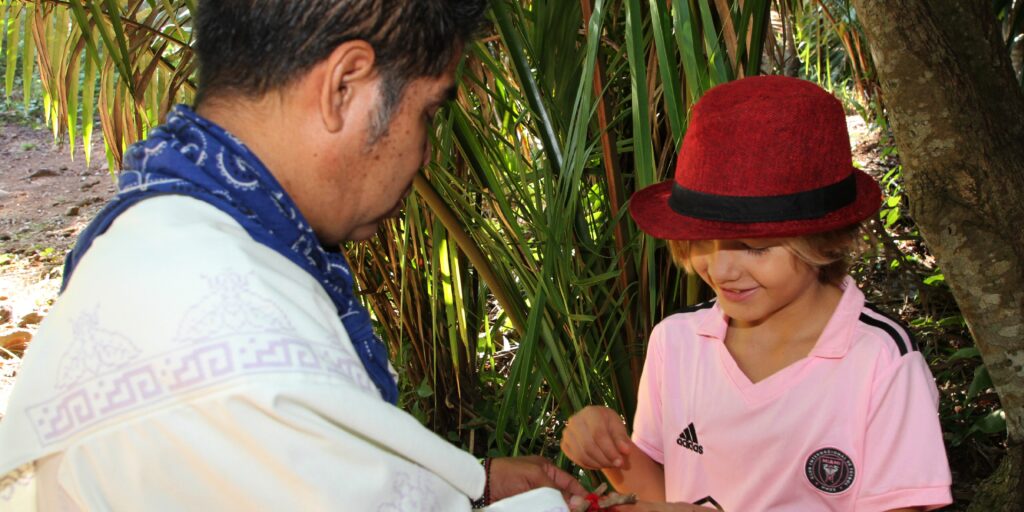
Image 1. Wixarika community leader teaching younger generation how to make a God’s Eye. Passing the traditions to youth within the community, as well as people from different cultures, is equally important. (Picture: Carlos Cordova)
Bringing the Living Classroom to Life
The idea of a “living classroom” can be brought to life through hands-on activities such as weaving sessions, traditional cooking, guided nature walks with ecological stories, or seasonal rituals where young people and visitors take part together. These activities should be created with the community so that cultural protocols are respected and youth are truly involved, not just watching from the side. Local schools could also strengthen this by teaching crafts, traditions, and languages, helping young people appreciate and carry their culture forward. When education and tourism work together in this way, they create an environment where traditions are actively learned, practiced, and honoured. (Vilppula 2025, 54–56.)
Designing tourism as a living classroom requires careful planning. Service design tools can structure interactions so that they are meaningful. Co-created rules and clear guidelines, based on service design principles, can help communities guide visitor behaviour, such as respecting sacred spaces, following cultural protocols, and avoiding overcrowding, while allowing communities to maintain control over how their cultural content is shared (Stickdorn et al. 2018, 52). Communities can also limit group sizes, create visitor codes of conduct, and schedule activities so that sacred practices are not disturbed. This makes sure culture is shared on the community’s terms. (Vilppula 2025, 61.)
In a living classroom, traditions are practiced with elders guiding the activities, and visitors participating alongside young people from the community. This creates a space where knowledge moves between generations and stays relevant. Wider use of this model can grow through cooperation between tour operators, communities, and educational institutions. (Vilppula 2025, 23–24.) When communities set clear guidelines, involve their youth, and show the cultural, educational, and economic value of this model, it becomes easier to adopt. Over time, the living classroom approach could grow into a commonly used framework for indigenous tourism, guiding regional planning and helping keep cultural traditions strong.
Summary
Regenerative tourism offers an opportunity to see tourism as more than an economic activity. It can even become a bridge between generations. A model where tourism acts as a “living classroom” strengthens cultural identity and creates spaces for young people to learn traditions through hands-on participation. At the same time, visitors gain deeper, more respectful experiences that add value for both the community and travellers.
Scaling this approach requires collaboration between communities, tourism operators, and educational institutions. When cultural protocols, youth involvement, and service design tools come together, they form a framework that supports cultural continuity and sustainable tourism. The living classroom can become a future practice that makes tourism more meaningful and regenerative.
References
Dredge D. 2022. Regenerative tourism: Transforming mindsets, systems and practices. Journal of Tourism Futures. Vol. 8 (3), 269–281. Cited 1 Dec 2025. Available at https://doi.org/10.1108/JTF-01-2022-0015
Stickdorn, M., Hormess, M. E., Lawrence, A. & Schneider, J. 2018. This is service design doing. O’Reilly Media.
Vilppula, M. 2025. Designing a Sustainable Travel Experience with Indigenous Communities in Mexico. Case organization: Tour Operator Aventura Ltd. Master’s thesis. Lahti University of Applied Sciences, Faculty of Business and Hospitality Management. Lahti. Cited 1 Dec 2025. Available at https://urn.fi/URN:NBN:fi-fe20251127112360
World Tourism Organization. 2019. Recommendations on Sustainable Development of Indigenous Tourism. Madrid: UNWTO. Cited 1 Dec 2025. Available at https://doi.org/10.18111/9789284421299
Authors
Miia Vilppula works as a Tourism Product Designer and is completing her MBA in International Tourism and Event Management at LAB University of Applied Sciences.
Sari Suominen is a Senior Lecturer of Entrepreneurship and Leadership at the LAB University of Applied Sciences.
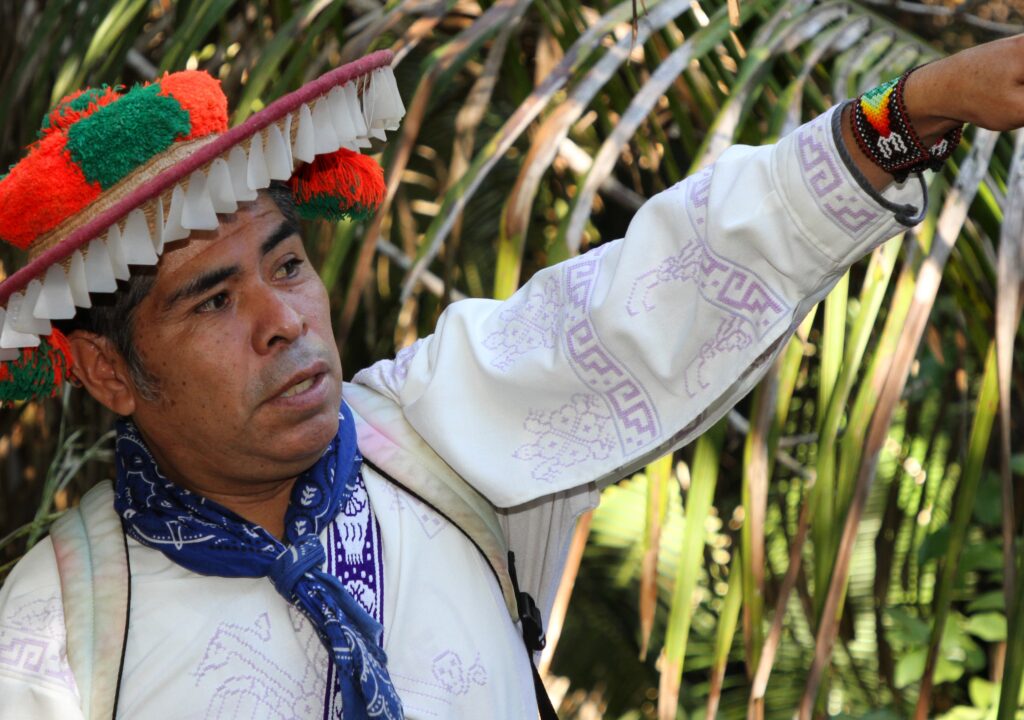
Illustration: A Wixarika community leader explains the importance of tradition. Traditional clothing is always worn when entering sacred sites, as a sign of respect and spiritual connection for the community. (Picture: Carlos Cordova)
Reference to this article
Vilppula, M. & Suominen, S. 2026. Regenerative Tourism as a Living Classroom: Passing Traditions to Youth. LAB Pro. Cited and date of citation. Available at https://www.labopen.fi/lab-pro/regenerative-tourism-as-a-living-classroom-passing-traditions-to-youth/